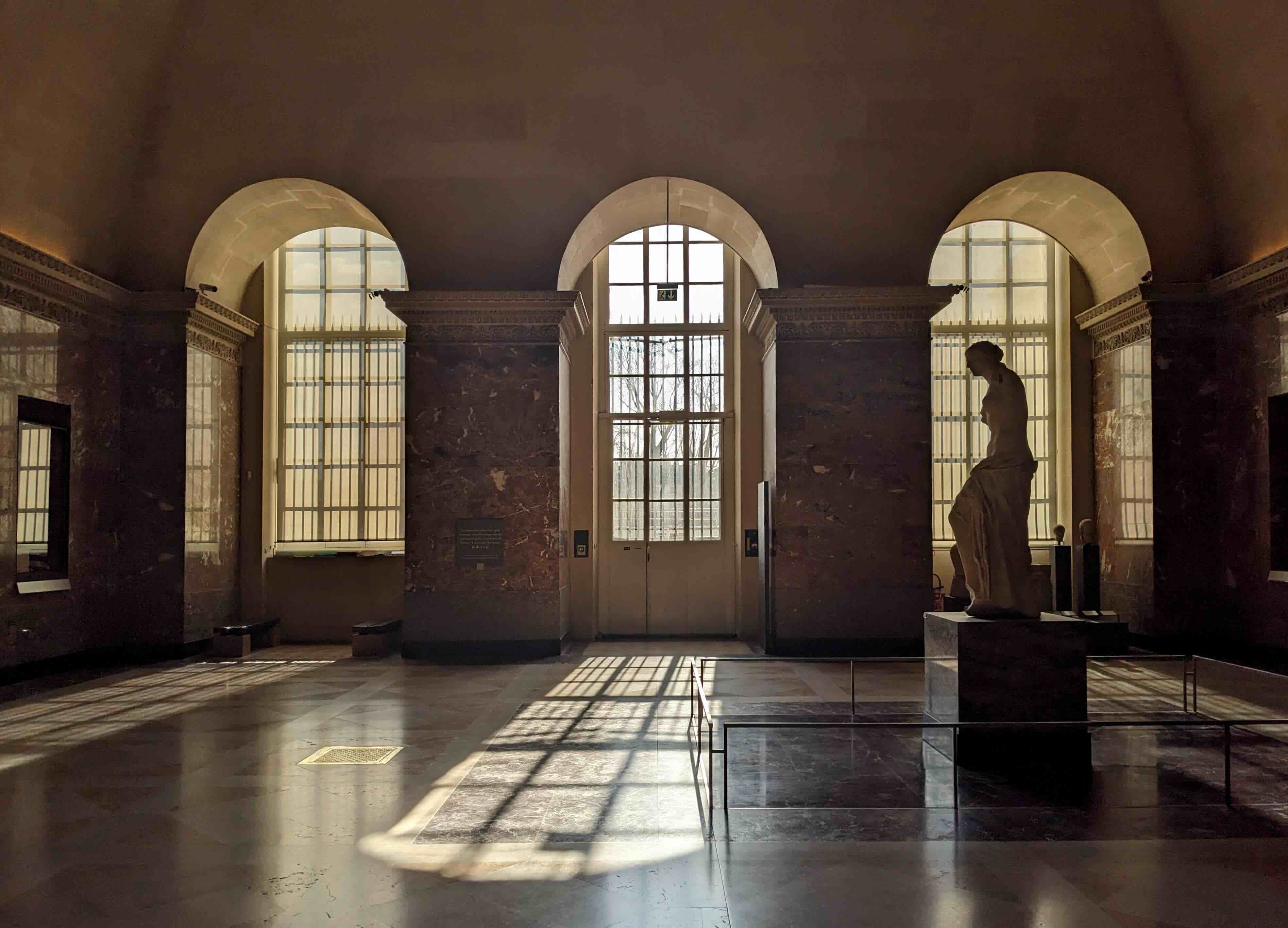
Stand in her room at the Louvre for ten minutes and watch. People arrive, raise their phones, take the photo, check it, and leave. Some turn around and take a selfie with her over their shoulder. Very few simply stand there and look.
It's not their fault. She's one of the most famous statues in the world. We already know what she looks like, or think we do. The photo is proof we were there, and seeing feels like it already happened years ago, on a postcard.
Her real name
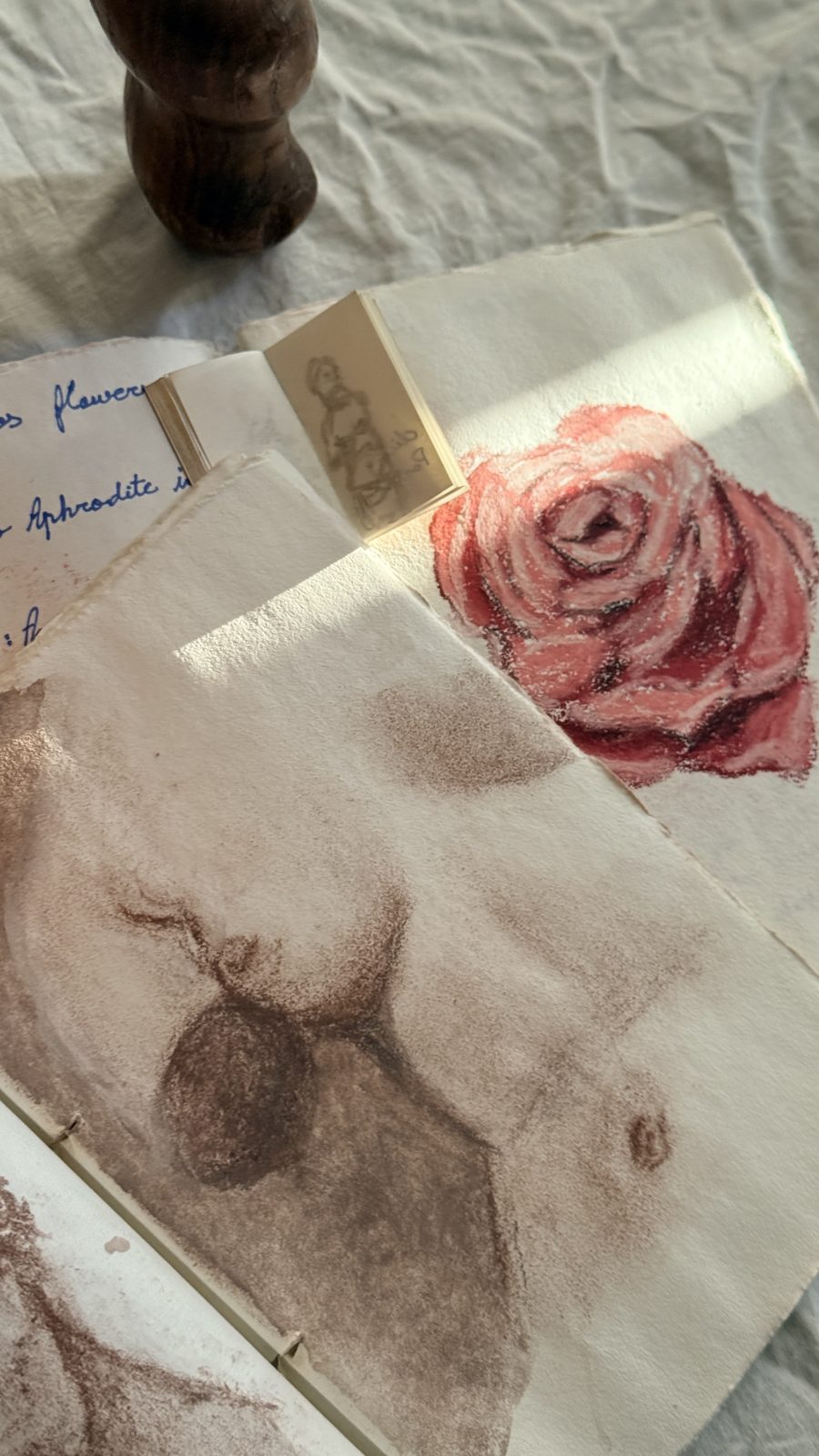
Most people know her as the Venus de Milo, her Roman name. I'm Greek, so I can't quite bring myself to: to me she is Aphrodite of Milos. A small difference, but it's a good reminder that even the most famous things carry a story we've stopped noticing.
And that is exactly what gets in the way. Before we see her, we see everything we know about her: the Louvre, the missing arms, the icon of beauty. Her fame stands between us and the marble.
A different way to look
In The Natural Way to Draw, published in 1941, the art teacher Kimon Nicolaïdes describes contour drawing: following the outline of a model with the pencil so slowly that you feel you are touching it rather than seeing it. Adapted with the gaze in place of the pencil, it becomes a quiet practice. I call it contour gazing.
You can try it now with a photograph of her, or with any statue, painting or object near you. It's a guide, not a guided meditation, followed by silence.
If you like reading slowly, you'll like the welcome issue of “(meditating) On Art”: free to read on screen, with a meditation on receiving a letter.
Contour gazing, in five steps
- Relax your face and shoulders. Take in the whole statue and the room around it, without thinking anything about it. Just a statue, just a room.
- Choose one single point on her outline. Stay with it for a few breaths, until everything else seems to fade.
- Begin to move your gaze along the contour, very slowly. Every curve, every fold of the drapery. Imagine your eyes are leaving a pencil line behind them.
- If you rush, go back. There's nothing to finish. Halfway around her is more than enough.
- Close your eyes. Sit in silence for a minute, and notice what stayed with you.
What tends to happen
After a moment, you get used to her. After a longer moment, you're so busy with the curve of a shoulder that there's no room left for her fame, her myth, or the crowd. She stops being an icon and becomes stone, light, and someone's patient hands.
And then a question: who else would you like to see without their story? You can try this one in front of a mirror.
Where this practice comes from
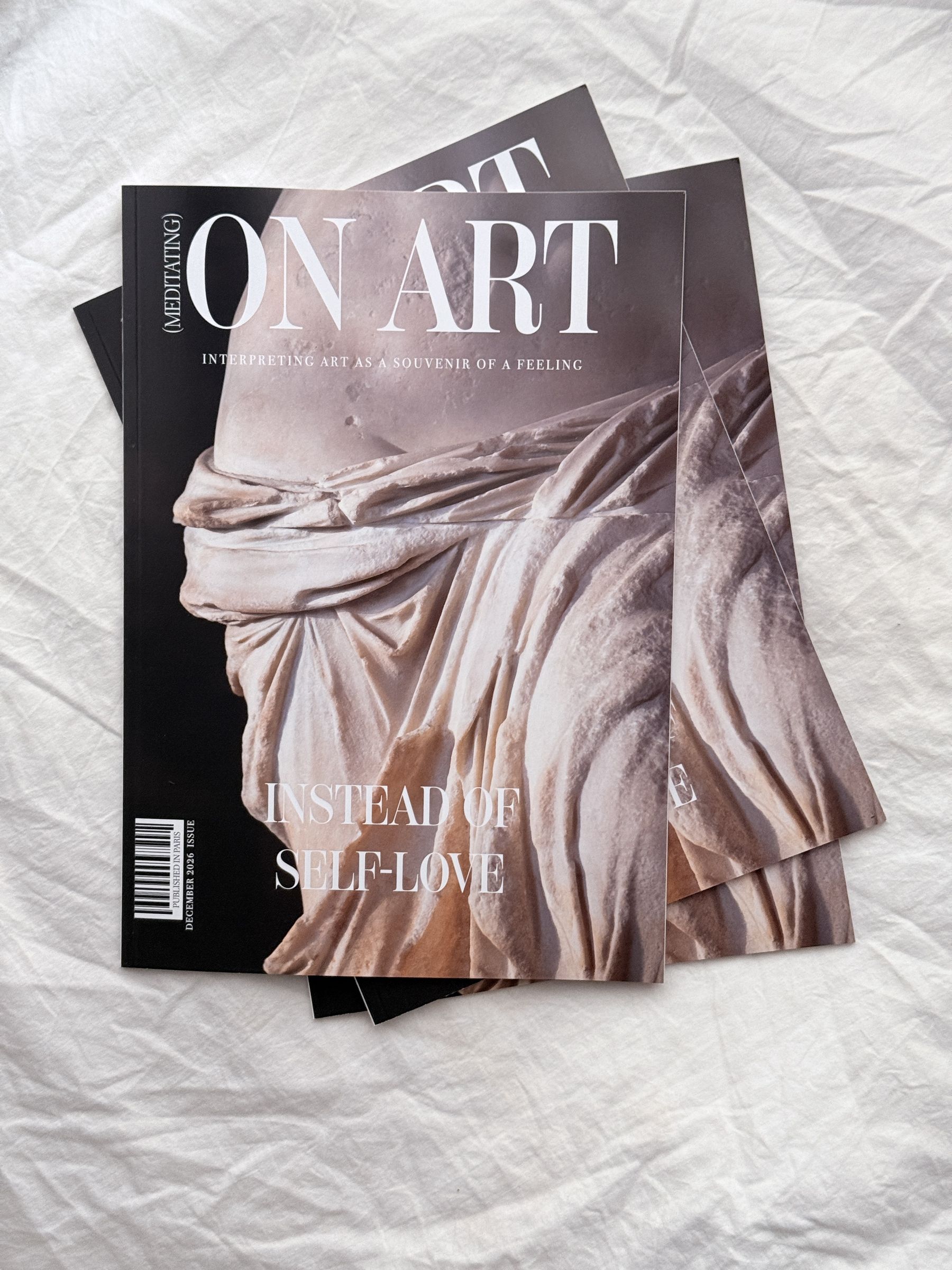
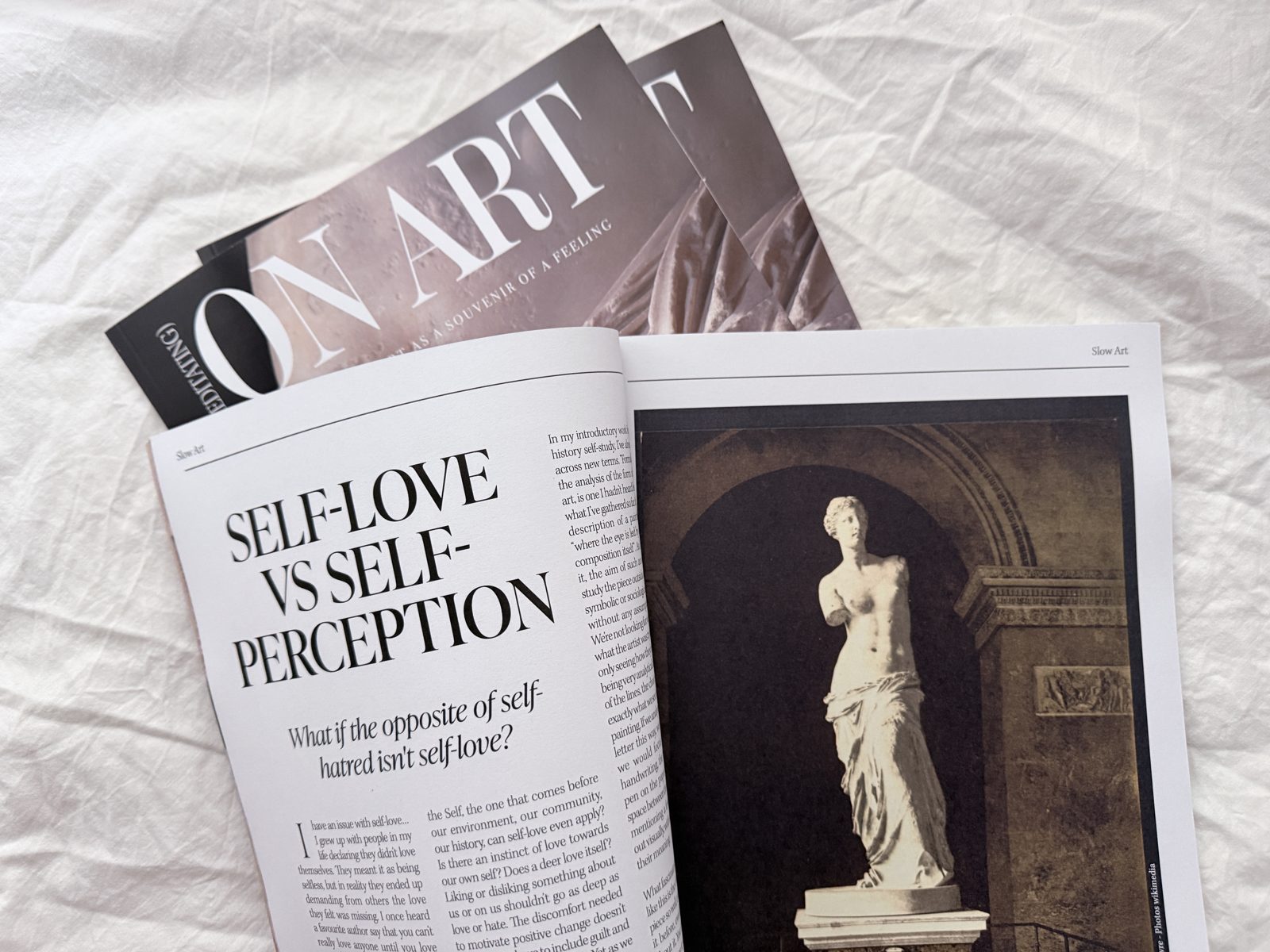
Contour gazing is the Slow Art practice in issue 01 of "(meditating) On Art", our printed magazine in English and French. Around it you'll find an editorial on silence, a personal art-history study and how to start your own, a month of short meditations with Aphrodite, a ghee cake recipe, and a planner to write in.
The magazine comes with "(letters) On Art", the monthly letter. Anyone who subscribes in December receives issue 01; from January, new subscribers begin with the next season's issue.
Remember to take as much time as you need, and meet me at the next one.
Love,