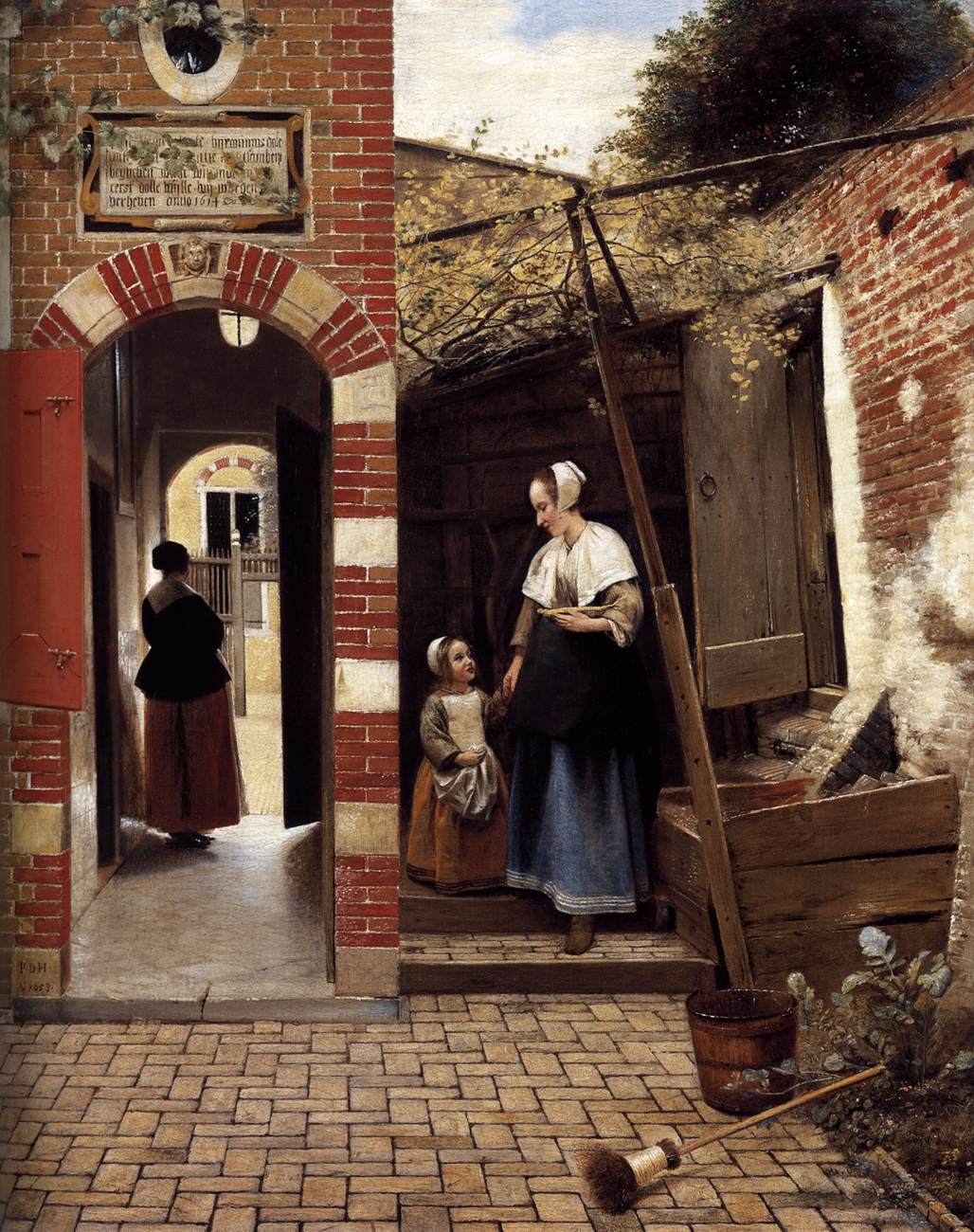
Have you ever stood in front of a painting feeling that you were supposed to understand something, and didn't? Many people feel that way in museums. They read the label, nod, and move on, a little intimidated.
Here's a secret: you don't need an art history degree to read a painting. You need questions. Art historians use them all the time, and you can too.
1. What do I see?
Before interpreting anything, describe. People, objects, colors, the setting, the light. Say it in plain words, as if to someone on the phone who can't see it. This alone will make you notice twice as much.
2. Where does my eye go first, and where does it go next?
Painters guide our gaze with light, color and lines. Notice the path your eyes take: the brightest point, a pointing hand, a road leading into the distance. That path is part of the painting's meaning.
3. What's happening just before, and just after?
Every painting freezes a moment. Imagine the second before and the second after. A raised hand, a letter half read, a glance toward the door: they all suggest a story.
4. How does it make me feel, and why?
Calm, uneasy, nostalgic, amused? Then look for the reason in the painting itself: the colors, the space, the faces, the darkness or brightness. Your feeling is information.
5. What would I ask the painter?
Why this color? Who was she? What did you leave out? You may never get an answer, but the question will keep the painting alive in your mind long after you leave.
Then read the label
Now, and only now, read the label or the guide. You'll find it means much more, because you'll be comparing it with your own observations instead of replacing them.
Keep your answers
The Collector's Diary is a free printable journal with a short guided meditation, designed for exactly this kind of slow looking: where you met a work, what you noticed first, what your senses took in, how it made you feel. Write your five answers next to it, and you'll build your own art history, one painting at a time.
Remember to take as much time as you need, and meet me at the next one.
Love, Evi