
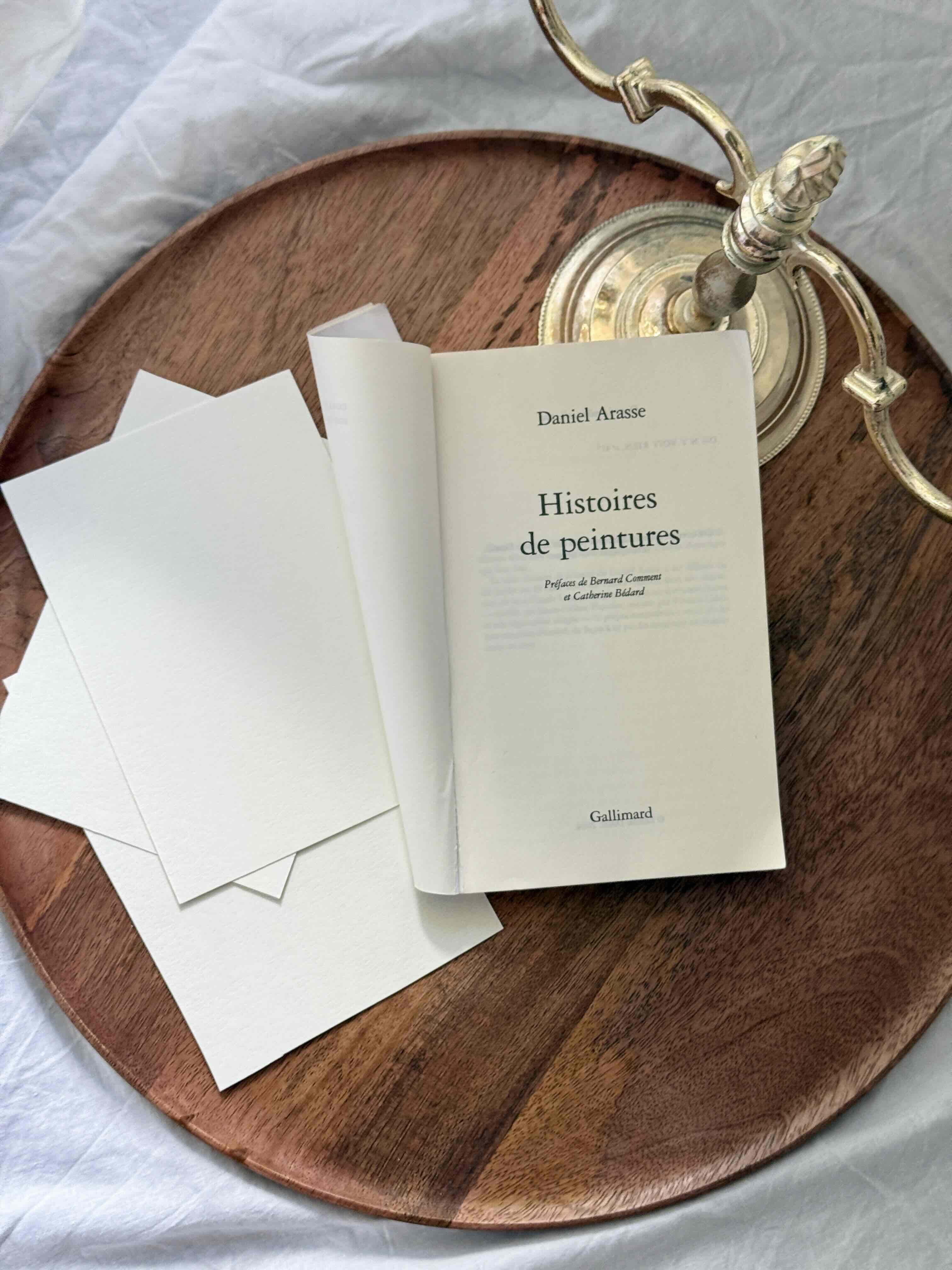
Open a drawer in almost any home and you'll find them: museum postcards bought after an exhibition, cards from friends on holiday, vintage postcards from a flea market, a few written by someone you loved. Many of them show masterpieces. Most of them live in the dark.
Postcards are some of the most affordable art in the world, and some of the most personal. Here's how to bring yours into the light.
1. A rotating frame
Choose one beautiful frame with a wide mat and swap the postcard every week or every season. Like a tiny museum with changing exhibitions.
2. A picture ledge
A narrow shelf where postcards can lean in a row, overlapping slightly. Mix art reproductions with handwritten cards. Easy to rearrange, and very charming above a desk or a bed.
3. A grid on the wall
Arrange a dozen postcards in a neat grid with small washi tape or removable putty. Group them by color, by painter or by feeling. The effect is calm and gallery-like.
4. Tucked into a mirror
The old-fashioned way: slipped into the frame of a mirror, where you'll see them every morning.
5. A clothesline
A thin string across a window or a wall, with small wooden pegs. Ideal for postcards with writing on the back, which you can turn around whenever you like.
6. An album you actually open
A beautiful album or box kept on the coffee table, so guests and you can leaf through them slowly.
A few tips
Keep them out of strong direct sunlight, which fades colors. Don't glue them down: you'll want to read the backs again one day. And mix the famous with the personal: a Vermeer next to a card from your best friend says more about you than either alone.
Remember why you kept them
Each postcard is a souvenir of a feeling: an exhibition, a trip, a person. The Collector's Diary is a free printable journal with a short guided meditation, made to help you remember where you met a work of art, what you noticed first and how it made you feel. A catalogue for the collection in your drawer.
Remember to take as much time as you need, and meet me at the next one.
Love, Evi