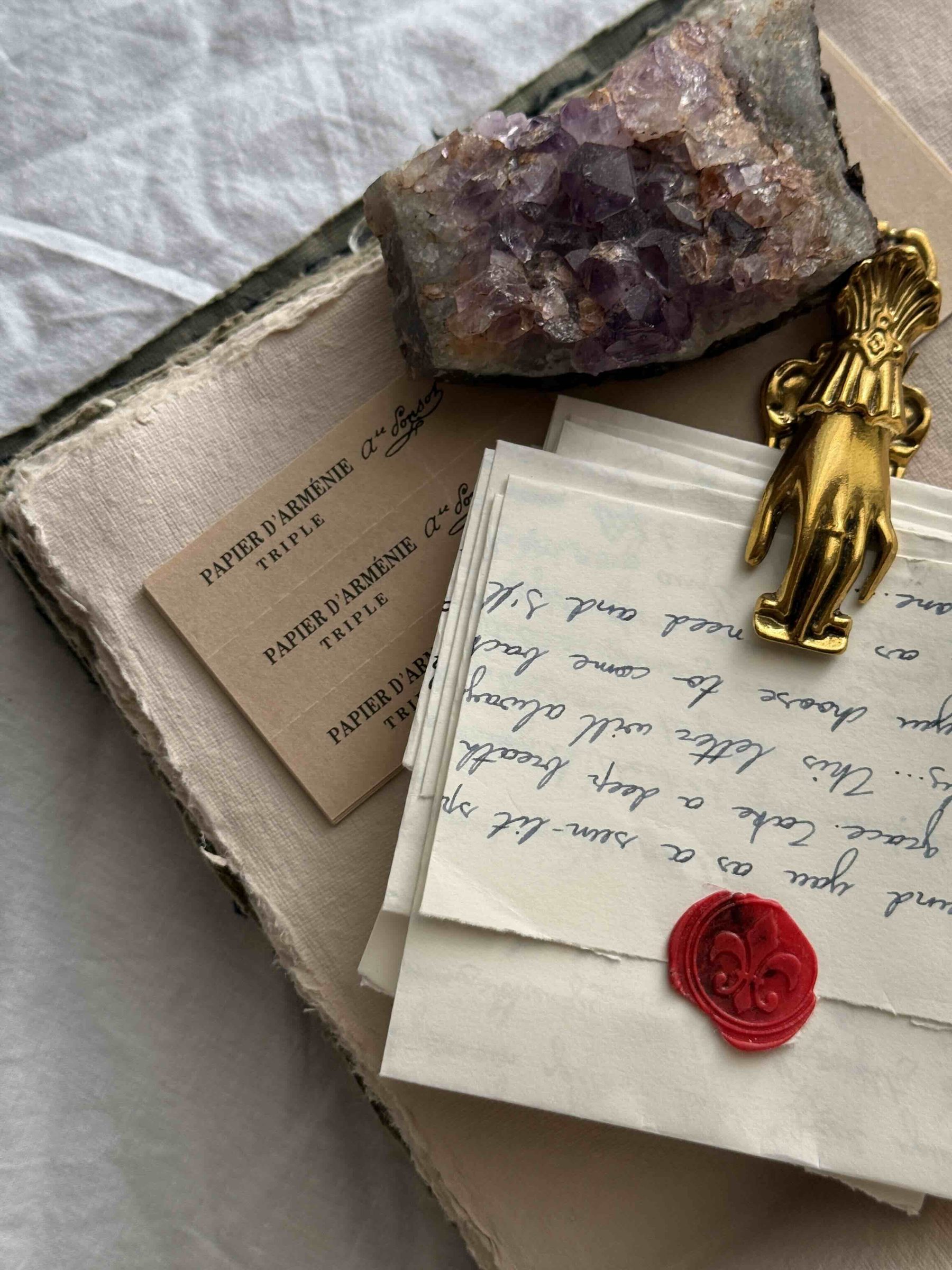
An apartment above the gardens of the Palais-Royal. Evening. A woman in her seventies, propped up on her daybed, writing by the light of a lamp shaded in blue. The paper under her pen is blue too.
That was Colette in her last years. She called her lamp her fanal bleu, her blue beacon, and gave the name to one of her final books, Le Fanal bleu, published in 1949. Passers-by in the gardens below could see its glow at her window.
Why blue?
Colette never wrote a manifesto about it, so we can only imagine. Blue paper is gentle on the eyes. It feels private, like a sky turned toward night. And for a writer who lived through her senses, who wrote about cats, gardens, the smell of skin and the taste of fruit, the color of the page was surely part of the pleasure.
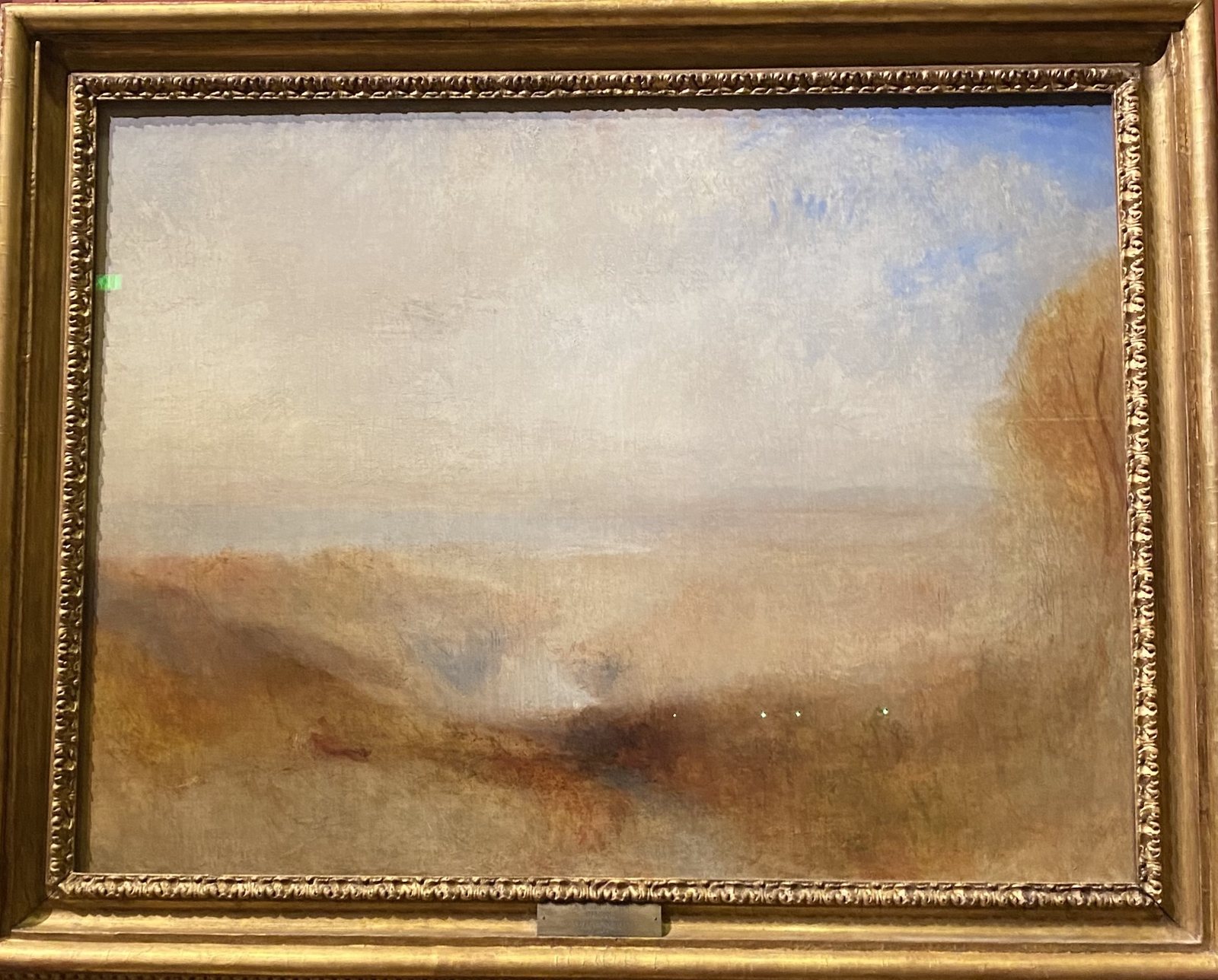
Painters have always known that color changes how we feel in a space. Blue rooms recede and quiet down. Warm colors come forward and wake us up. You don't need a theory to notice it: sit in a blue room, then a red one, and feel the difference in your body.
Borrow Colette's blue
- Write on colored paper. Choose a soft blue, a cream, a pale green. Notice whether your words change. Many people find they write more slowly and more honestly on paper that isn't stark white.
- Change the light, not the room. A lamp with a colored or warm shade transforms an evening without moving any furniture.
- Choose a "writing color" for yourself. A notebook, an ink, a pen. When you see it, your mind learns that it's time to slow down.
- Look at blue for a minute. A painting, the sky, a scarf. Breathe slowly while you look. It's one of the simplest calming practices there is.
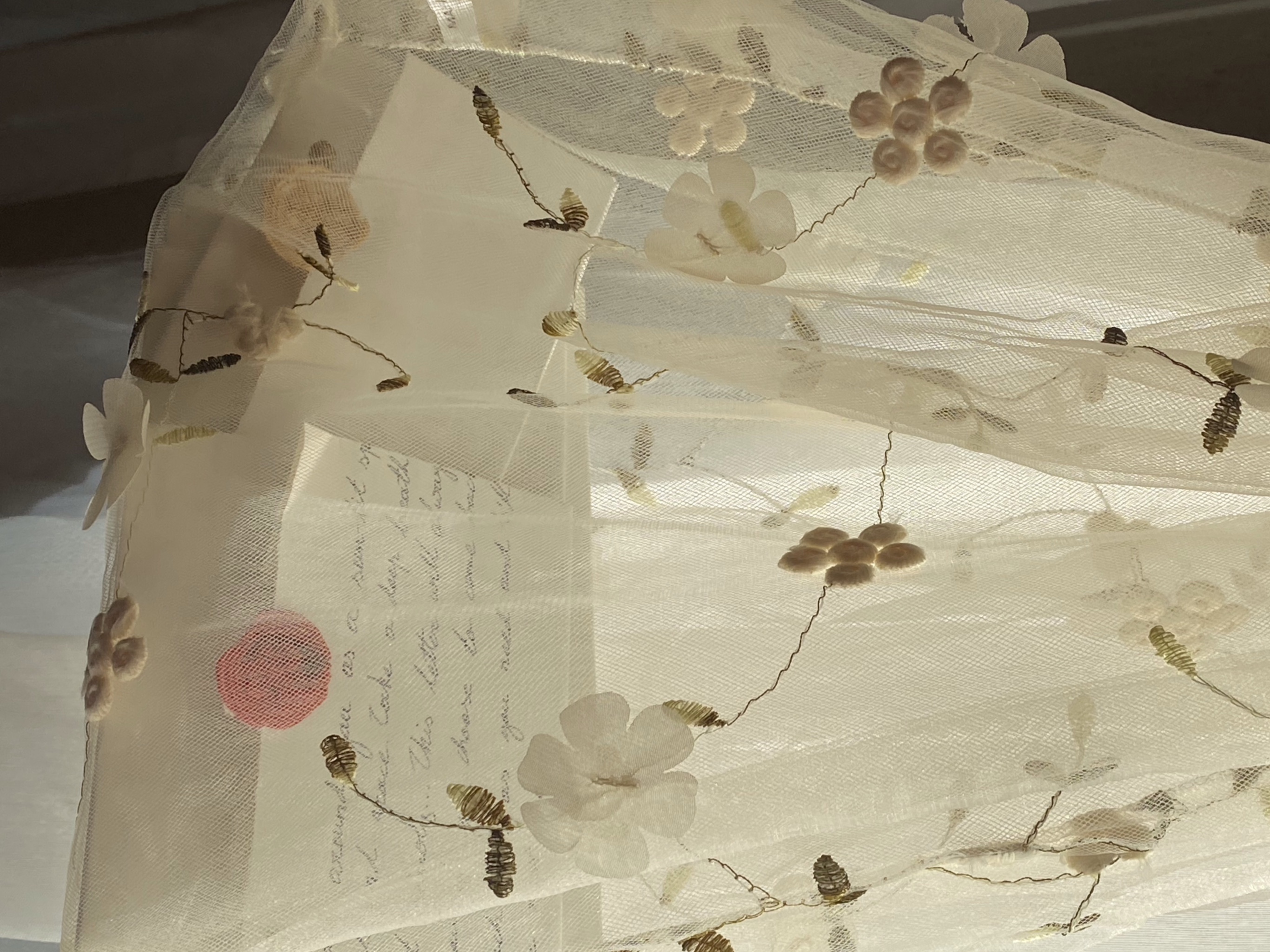
If you like reading slowly, you'll like the welcome issue of “(meditating) On Art”: free to read on screen, with a meditation on receiving a letter.
A writer who lived through her senses
Colette's books are full of sensory detail because she paid attention to everything. Her blue lamp wasn't decoration. It was part of a life arranged so that beauty and attention could meet every evening.
More slow culture
If you'd like more stories like this one, "(letters) On Art" brings them to your mailbox: a letter and a postcard every month, and each season the printed issue of "(meditating) On Art", with books, writers, music and places. A little blue lamp for your evenings.
Remember to take as much time as you need, and meet me at the next one.
Love,