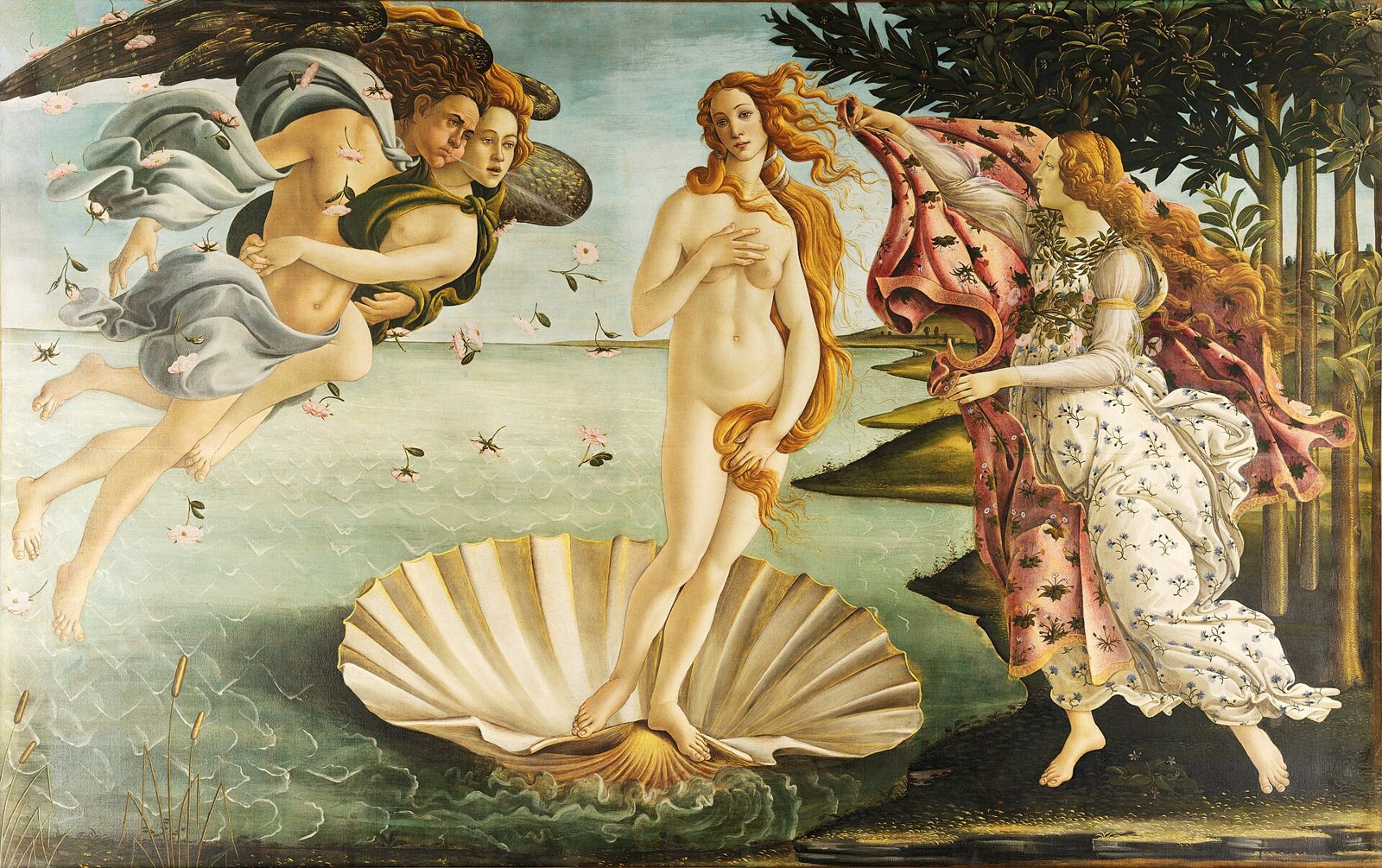
She rises from the sea on a scallop shell, her long golden hair blowing in the wind, one hand covering her heart. Sandro Botticelli's Birth of Venus, painted around 1484–86 and now in the Uffizi in Florence, is one of the most recognizable images in the world.
For centuries, people have asked who the model was. And one name keeps coming back: Simonetta Vespucci.
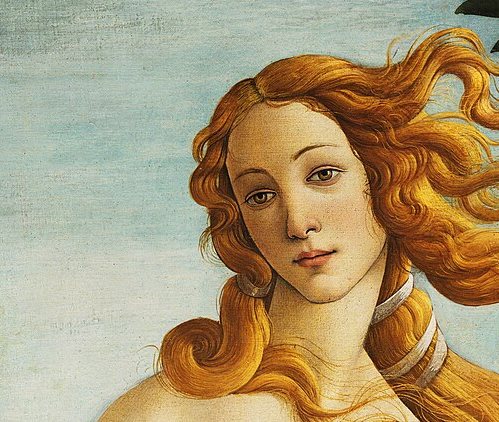
La bella Simonetta
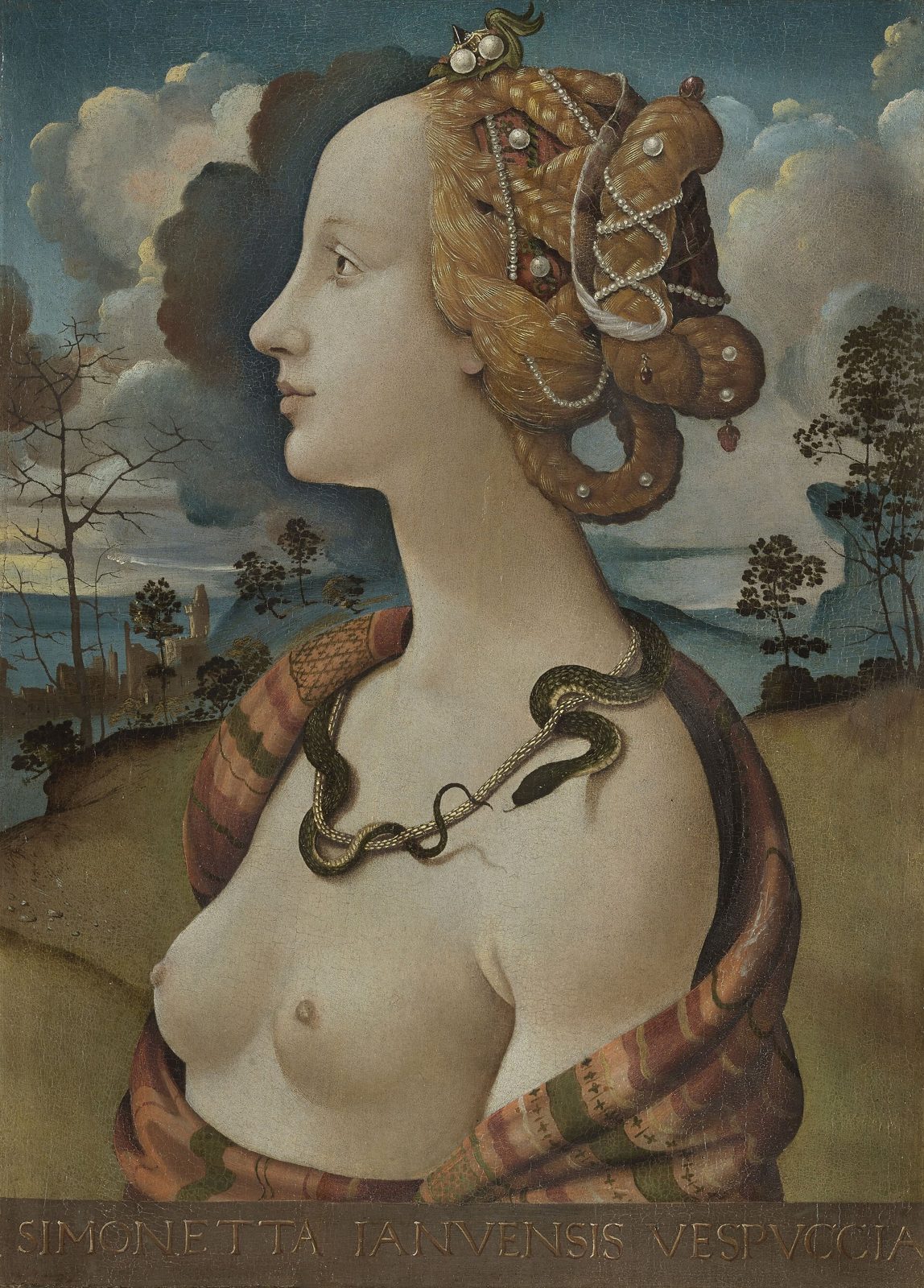
Simonetta was born in Liguria around 1453 and married into the Vespucci family of Florence at sixteen. She quickly became famous for her beauty. In a celebrated tournament in 1475, the young Giuliano de' Medici carried a banner said to show her image, and poets of the Medici circle wrote about her.
Then, in April 1476, she died, probably of tuberculosis, at just twenty-two or twenty-three. Florence mourned her. Her coffin is said to have been carried through the streets with her face uncovered, so the city could see her one last time.
The legend
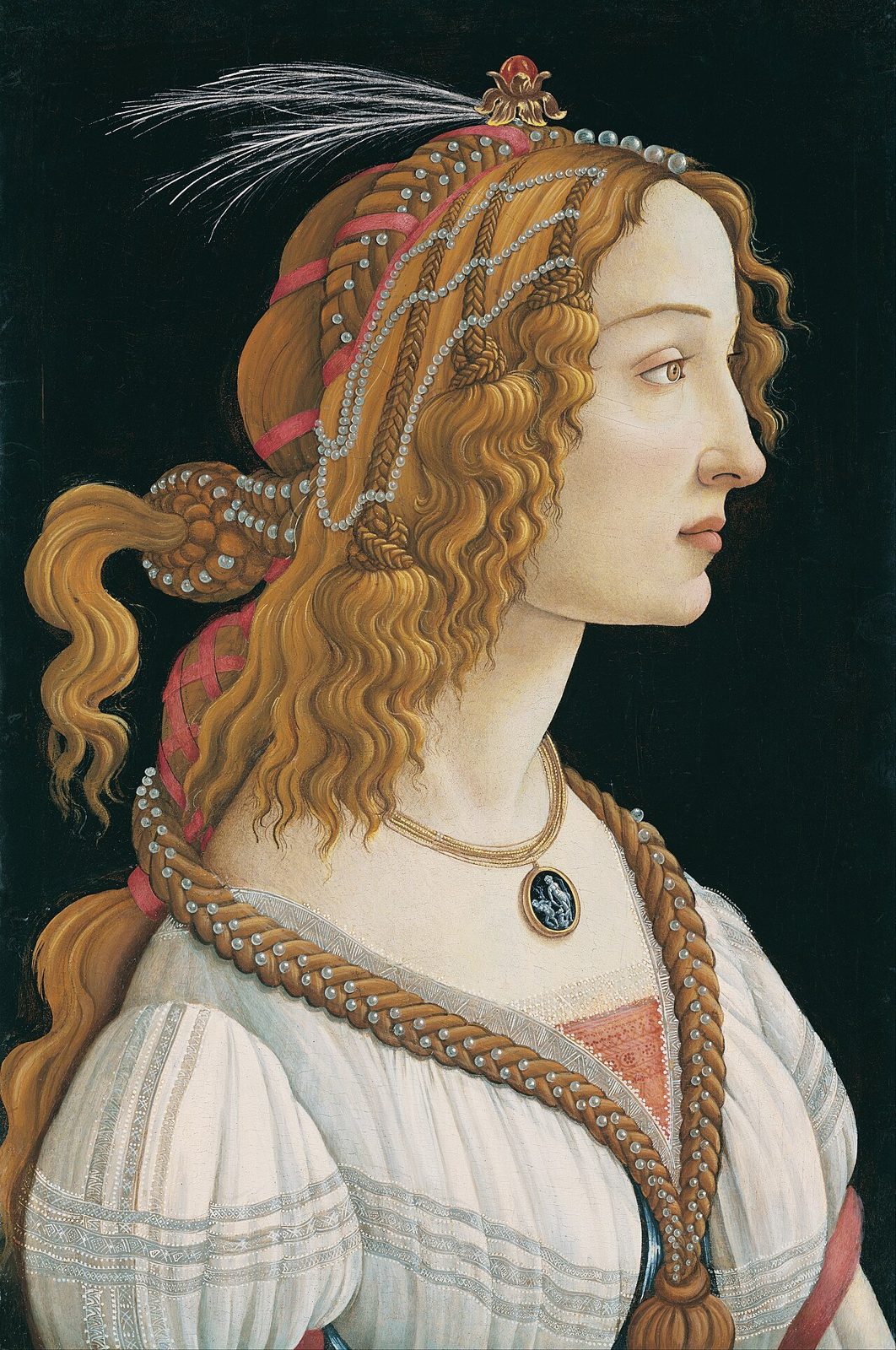
Here's where history becomes legend. Many people believe Botticelli painted Simonetta's face in his Venus, and in other works, years after her death. A famous story adds that Botticelli asked to be buried at her feet in the church of Ognissanti, where both are buried.
The truth is uncertain. There is no proof that Simonetta ever posed for Botticelli, and some historians think the idealized face of Venus belongs to no one in particular. But the legend has survived for centuries, and perhaps that says something too: we want beauty to have a story, and we want love to outlast death.
If you like reading slowly, you'll like the welcome issue of “(meditating) On Art”: free to read on screen, with a meditation on receiving a letter.
A meditation on a face
Look at the face of Venus for a few minutes. Not the shell, not the wind gods, just the face: the tilt of the head, the eyes looking slightly away, the calm mouth. Breathe slowly. Ask yourself: does it matter whether she was real? What do you feel when you look at her?
Then think of a face you love, one you carry in your memory. Hold it in your mind for three breaths.
A face that keeps changing
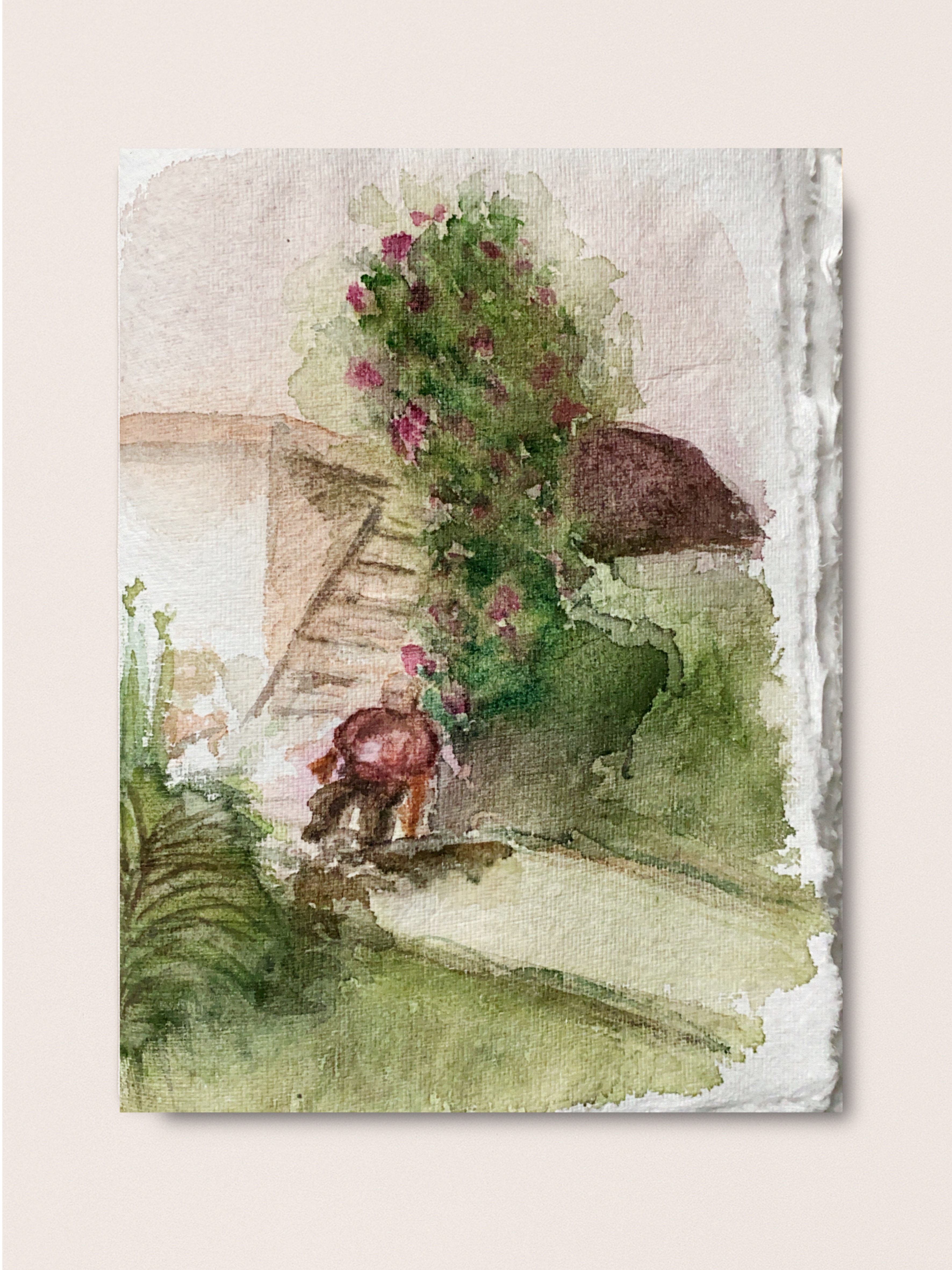
My print Anthropos, whose title is the Greek word for human being, is a deeply personal piece, originally a watercolor, whose meaning has shifted for me over the years. Each print is revived by hand with fresh brushstrokes, so no two are alike, and comes with a meditation letter. Some images become legends. Others simply keep us company.
Remember to take as much time as you need, and meet me at the next one.
Love,