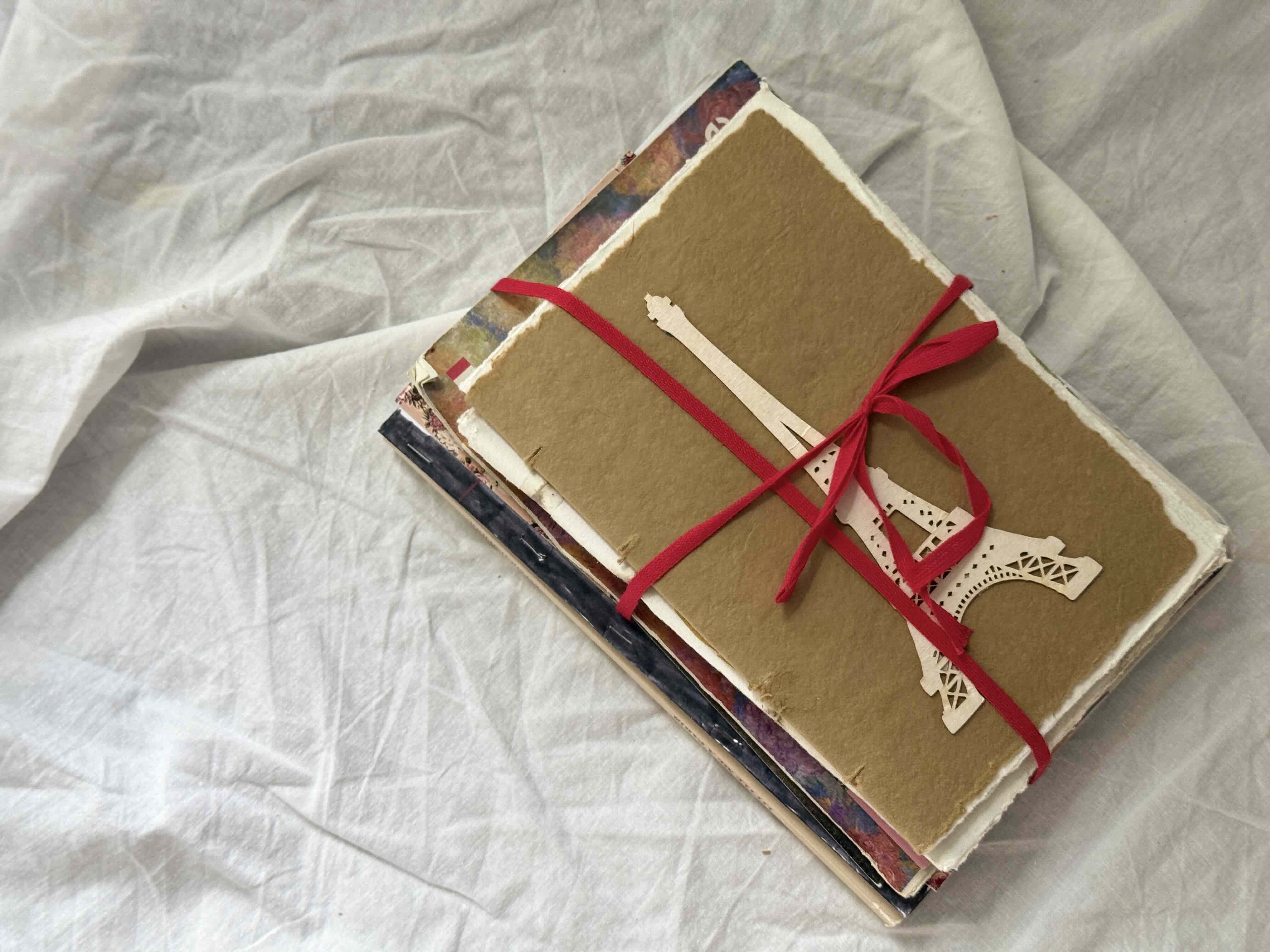
Somewhere in your home there is a small object that does nothing at all. A flower pressed between the pages of a novel you haven't opened in years. A ticket stub. A pebble from a beach whose name you've forgotten. You would never throw it away.
As a child I kept diaries with tiny locks, and when I lost one key, I picked my own diary open with a hair pin. I don't remember a single word I wrote in it. I remember the click. And that it was bright pink.
We don't collect objects. We collect anchors
Maybe we don't keep souvenirs for what they are, but for what they hold: proof that something happened, and that we were there. A cheap porcelain figurine from a gift shop can carry an entire afternoon. Touch it, and you travel.
Scent does it best. A smell can put you in three places at once: here, in a childhood kitchen, and in some future afternoon when you'll meet that smell again and be sent back to today.
Memory is not an archive
Here is the strange part. Memory researchers describe something called reconsolidation: each time we recall a memory, it becomes briefly changeable before it settles again. We don't replay the past. We retell it, a little differently, to the person we are now.
The chandeliers at that dinner become candelabras, because the softer light feels truer to the conversation. The downpour that soaked you in a garden becomes a gentle mist. In Before Sunset, Jesse and Céline spend nine years carrying one night in Vienna, and when they finally meet again, their versions of it don't quite match. Neither of them is lying.
Painters knew this long before scientists
Caspar David Friedrich painted his wife, Caroline, at the window of his studio in Dresden. We never see her face. We barely see the view: a strip of sky, the masts of ships on the river. It isn't a record of a room. It's a record of longing, of what it feels like to stand at a window and wait.
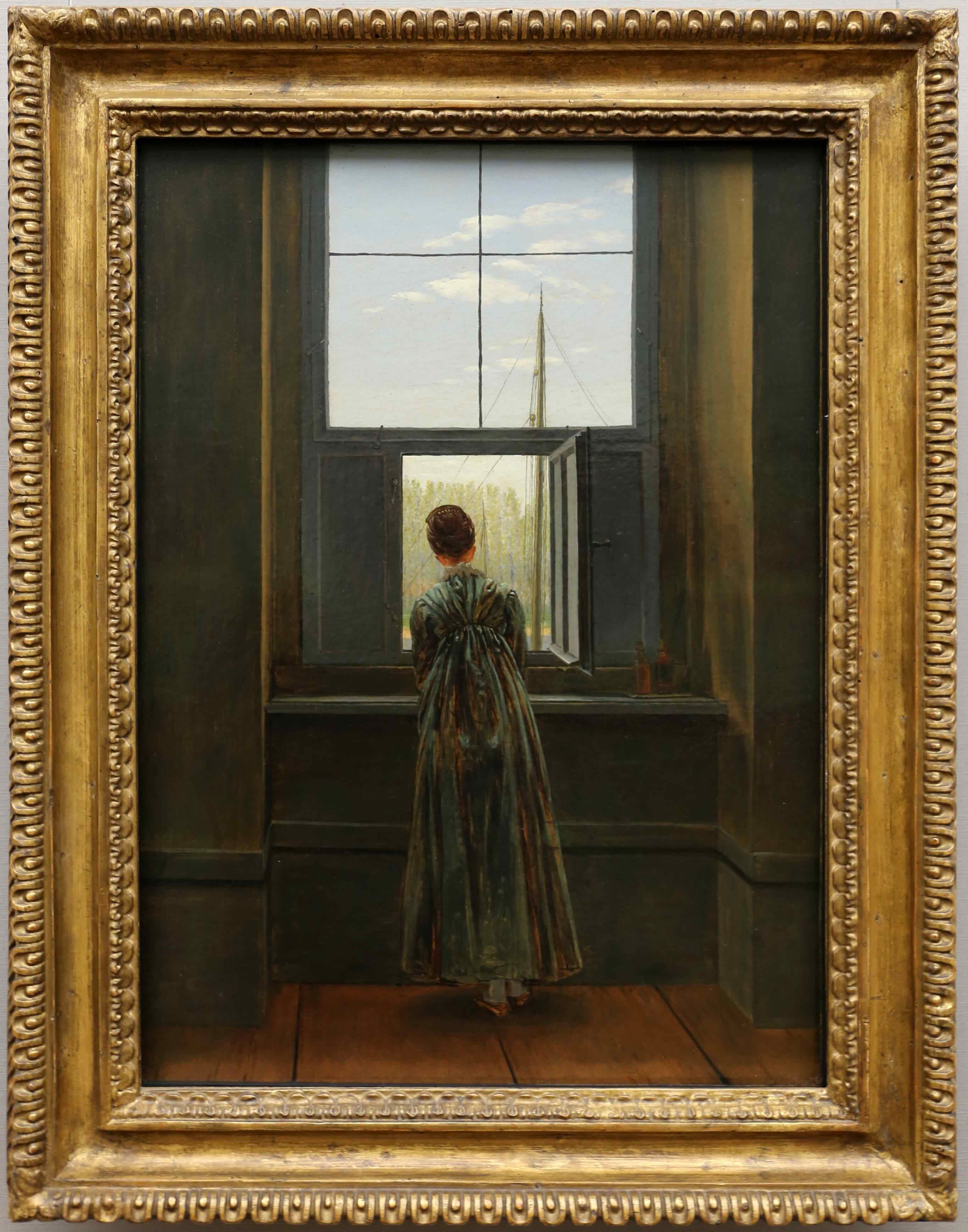
Caspar David Friedrich, Woman at a Window, 1822. Alte Nationalgalerie, Berlin
Most paintings we love work like this. They don't keep the facts. They keep the feeling.
What if forgetting protects a memory?
The memories we never revisit stay exactly as they were, like those pressed flowers in books we never open. It may be why we keep letters we never reread: rereading would change them.
And maybe that's alright either way. Perhaps the point was never perfect preservation, but letting a memory become more tender, more golden, more true to the feeling than to the fact.
A small practice: keep the feeling
- Choose one souvenir from a shelf or drawer and hold it.
- Don't try to remember what happened. Notice what you feel, in your chest, your shoulders, your breath.
- Find one word for it. Only one.
- Write that word somewhere close to the object: on the back of a photo, inside the book, on a slip of paper in the box.
The next time you hold it, you'll have the feeling first, and the story second. If a certain feeling has no object yet, these paintings for when you miss something you can't name might keep it for you.
A diary for the paintings you meet
This is what we mean by art as a souvenir of a feeling. The Collector's Diary is a free printable zine for remembering your encounters with art: where you met a painting, what you noticed first, and how it made you feel.
Remember to take as much time as you need, and meet me at the next one.
Love, Evi