At a brocante not long ago, I bought a tiny Victorian frame. Only at home did I notice the photograph inside: a woman, full length, so small you can't make out her face. You only see her shape. The hair, the curve of the bust, an impossibly narrow waist.
That waist may not have been entirely hers.
Retouched before Photoshop
Nineteenth-century photographers retouched their negatives by hand, with fine pencils and blades: softening skin, smoothing a jaw, taking a little off the waist before the image was ever printed. The moment there was a way to capture an image, there was a way to adjust it.
And before photography, there was the painter.
The portrait that disappointed a king
In 1539, Henry VIII was looking for a fourth wife. Hans Holbein the Younger was sent to paint Anne of Cleves, and his portrait, now in the Louvre, shows a calm, composed young woman. The story goes that when Henry finally met her, he felt misled. The marriage lasted about six months. Interestingly, the blame fell less on the painter than on the minister who had arranged the match.
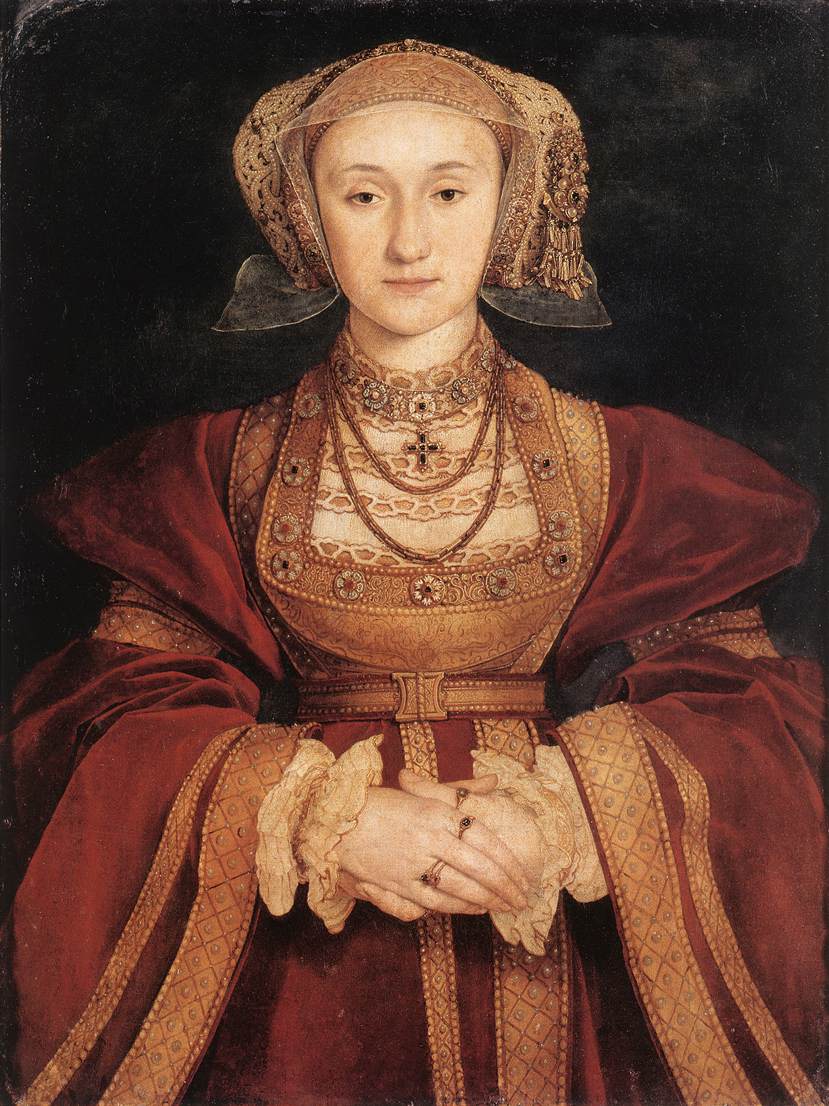
Hans Holbein the Younger, Anne of Cleves, 1539. Musée du Louvre, Paris
Court portraits were never meant to be neutral. They were introductions, negotiations, sometimes advertisements. A painter who made a duchess look ordinary didn't keep his commissions for long.
The portrait that told the truth
Oscar Wilde imagined the opposite. In The Picture of Dorian Gray, the face stays flawless while the painting in the locked room records everything. It's a frightening idea because it reverses what we expect: we trust the canvas to flatter, not to confess. (If you've ever wondered what your own portrait would show, here are some Dorian Gray journal prompts.)
You can be fooled only once
After that, believing becomes a choice. And we keep choosing it, because part of us wants the perfect image, the perfect note, the perfect light, even when we know a tool helped make it.
New tools, same wish, same believing eyes.
Maybe the answer isn't to declare war on every flattering image. Maybe it's to find enough peace that they stop threatening us. To enjoy a beautiful portrait the way you enjoy a bedtime story: fully, and without needing it to be true.
How to look at a flattering image
Try this with a painted portrait, an old photograph or anything in your feed.
- Notice what it wants you to feel first: admiration, envy, tenderness, trust.
- Look for the hand that made it. A softened shadow, a lengthened neck, a light that falls a little too kindly.
- Ask what the image tells you about the person who wanted it, and the people meant to see it.
- Then enjoy it anyway, the way you enjoy a novel you know isn't real.
Somewhere along the way, you'll notice that images stop pulling at you. You see them clearly, and you still find them beautiful.
Letters, true or imagined
Some of my letters are true, and some lean towards fiction. I hope you can enjoy them either way. The First Letter is a short sensory meditation on receiving a letter, with a sample of our magazine "(meditating) On Art", and it's free.
Remember to take as much time as you need, and meet me at the next one.
Love, Evi