A woman sits at a café table in Paris, staring at nothing. In front of her, a glass of cloudy green absinthe. Beside her, a man in a battered hat looks the other way. They seem to have nothing left to say.
When Edgar Degas's painting was shown in London in 1893, critics read it as a moral lesson about drink and decline. Many viewers simply decided who these two people were.
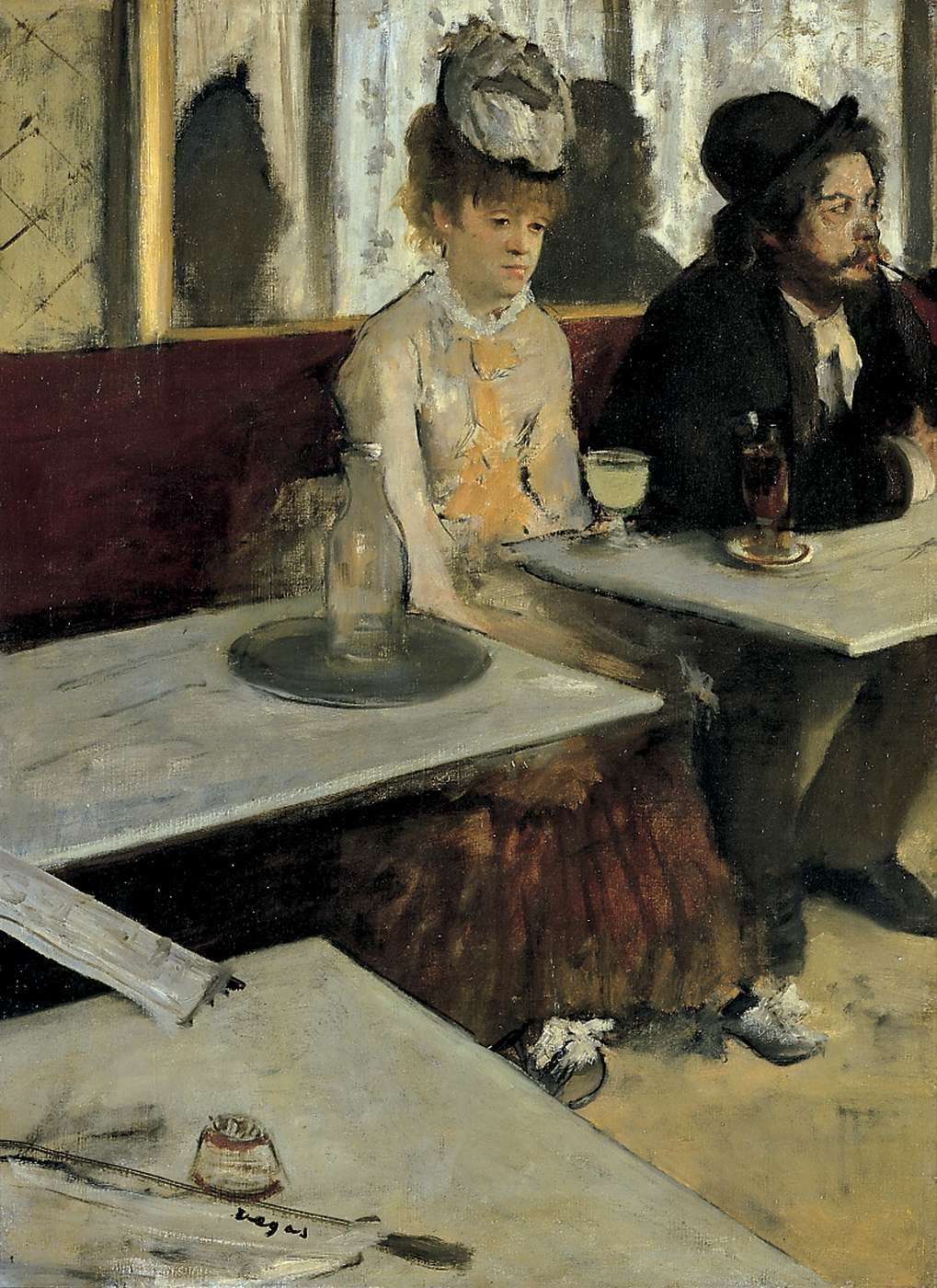
Edgar Degas, In a Café (also known as L'Absinthe), about 1875–1876. Musée d'Orsay, Paris
Who they really were
They were Degas's friends, posing for him at the Café de la Nouvelle Athènes in Pigalle: Ellen Andrée, an actress, and Marcellin Desboutin, a painter and engraver. The story goes that the painting followed them for years, and that Degas had to insist his models were not the sad drinkers people assumed.
Two people, frozen in one unflattering moment, and judged by strangers for a century.
We all do this
Think of someone you find difficult. A colleague, a neighbour, a relative. Chances are you carry a single portrait of them in your mind, painted from their worst moments. It's not entirely false. But it's one canvas, from one angle, in one light.
A practice: look again
This isn't about excusing anyone, or forgiving before you're ready. It's simply about seeing more of the picture.
- Bring the person to mind. Notice where you feel the dislike in your body.
- Picture them as a painting. What's the setting? The light? What expression has the painter given them?
- Now change one thing about the painting. Paint them as a child, before life happened to them. Or on an ordinary morning, making coffee, alone.
- Ask quietly: what might they be protecting? What might they be tired of?
- Find one true thing that's kind to say about them. Even small. Even reluctantly.
- Notice whether anything in your body has softened. If not, that's alright too.
Understanding someone doesn't mean letting them treat you badly. It just means you carry a little less of their weight. If something heavy comes up, a letter you'll never send can hold it.
A softer place to begin
The First Letter is a short sensory meditation on receiving a letter, with a sample of our magazine "(meditating) On Art". It's free, and it asks nothing of you but a few quiet minutes.
Remember to take as much time as you need, and meet me at the next one.
Love, Evi