You hear the room before you see it. A murmur, a shuffle, a forest of raised arms. Somewhere at the front, behind thick glass, there's a small portrait of a woman with folded hands. Everyone is facing her.
Almost nobody turns around.
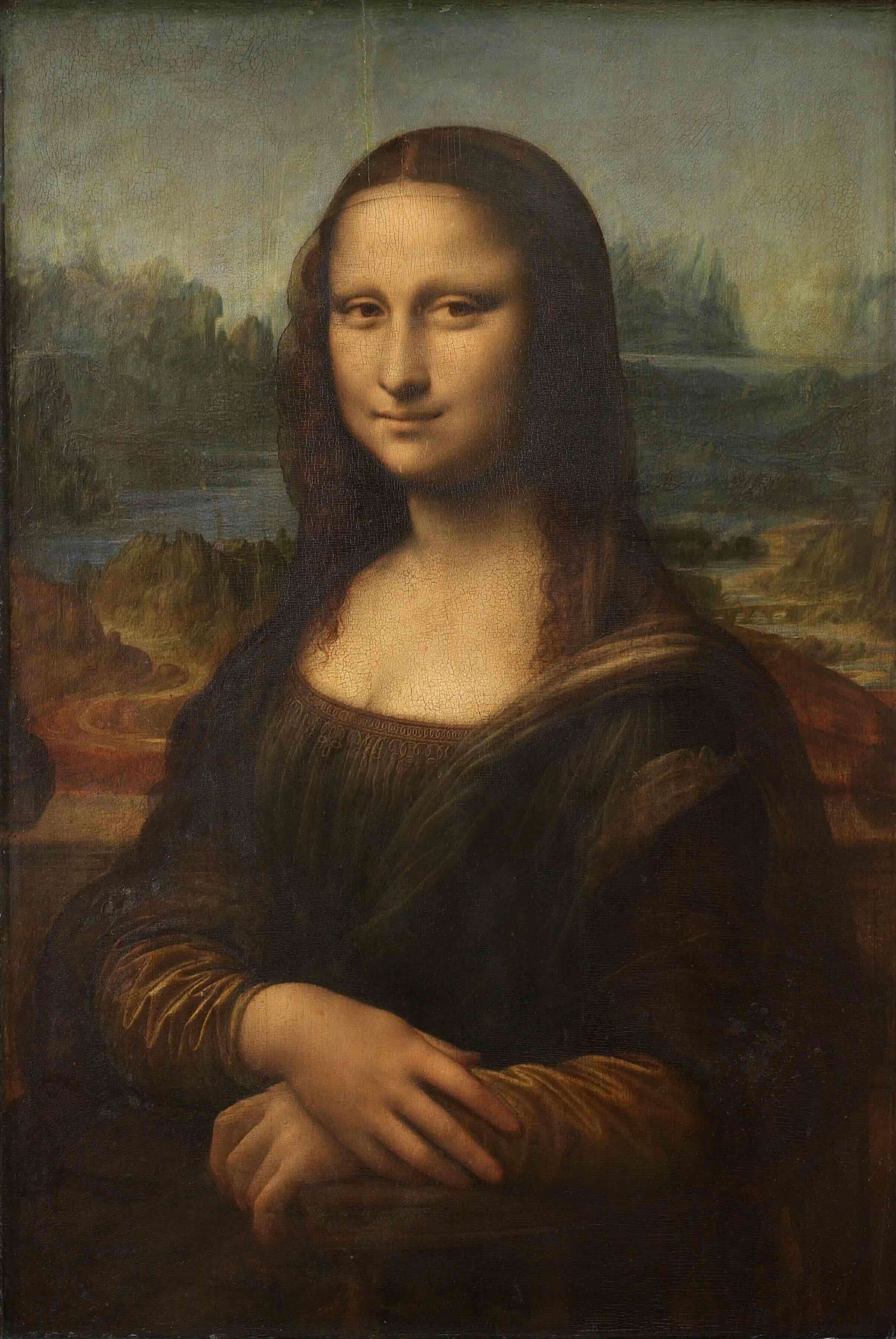
Leonardo da Vinci, Mona Lisa, about 1503–1519. Musée du Louvre, Paris
The painting behind your back
On the opposite wall of the Salle des États hangs the largest painting in the Louvre: Paolo Veronese's The Wedding at Cana, painted in 1563. It's almost ten metres wide. More than a hundred figures crowd a Venetian banquet: musicians, servants, dogs, a cat, guests in silk, someone pouring water that has just become wine.
It was painted for the refectory of a monastery in Venice, where the monks would have eaten beneath it every day. Napoleon's troops took it to Paris in 1797. It never went back.
It's huge, joyful and full of stories. And most visitors have their backs to it.
Why the crowd isn't wrong
There's nothing foolish about wanting to see the Mona Lisa. She's earned her fame: the softness of the shadows around her mouth, the misty landscape behind her, the strange calm of her gaze. But fame pulls attention in one direction, and it's easy to follow it without noticing what else is there.
Turn around
You can do this in the Louvre, or in any crowded place.
- Notice where everyone is looking. Look too, for as long as you like.
- Then slowly turn around.
- Let your eyes wander across whatever is behind you without choosing anything for ten breaths.
- Pick one small detail no one else seems to have noticed. In the Wedding at Cana, try the musicians in the centre, or the cat at the bottom.
- Stay with it until it feels like yours.
The story of how the Mona Lisa became so famous starts with the day she disappeared. And for calmer visits, here's why you shouldn't try to see the whole museum.
Something to turn towards
The First Letter is a short sensory meditation on receiving a letter, with a sample of our magazine "(meditating) On Art". It's free, and it's a quiet thing to turn towards.
Remember to take as much time as you need, and meet me at the next one.
Love, Evi