“Personal curriculum” has quietly become one of the more interesting trends of the past couple of seasons — people designing their own informal course of study, outside any institution, often around exactly the kind of thing a formal class would make feel too heavy: art, philosophy, a language, a period of history. It’s the same impulse behind the quiet life aesthetic and the museum aesthetic Pinterest boards, just with an actual structure underneath the mood board.
The wall most people hit is the same one: they want to go deeper, but “generally studying art history” is too vague to actually start, and a real class feels like too much commitment for something meant to feel calming. The fix isn’t more structure. It’s more specificity.
Pick one lens, not a subject. Instead of “art history” — something narrow enough to hold for a week or a month. Hilma af Klint’s Temple series, for instance, rather than “abstract art” broadly. One body of work, held closely, teaches you more than a wide survey ever will.
Go one layer past the image. Once you’ve sat with the work itself, follow one thread outward — a biography, a single essay, one interview. With af Klint specifically, her biography reframes the Temple paintings entirely once you know how private and unshown they were meant to stay. That kind of context lands differently when it arrives after you’ve already formed your own reaction, not before.
Pair it with something sensory, specific to that lens. Not generic “calming music” — music actually adjacent to the period or place. A recipe from the region. A scent, a fabric, a texture that belongs to that particular world rather than to slowness in general. Specificity is what makes a personal curriculum feel like a practice and not a mood.
Let silence come before research, every time. Sit with the work before you read anything about it. Let your own reaction arrive first, unshaped by what you’re “supposed” to notice, and you’re supposed to feel.
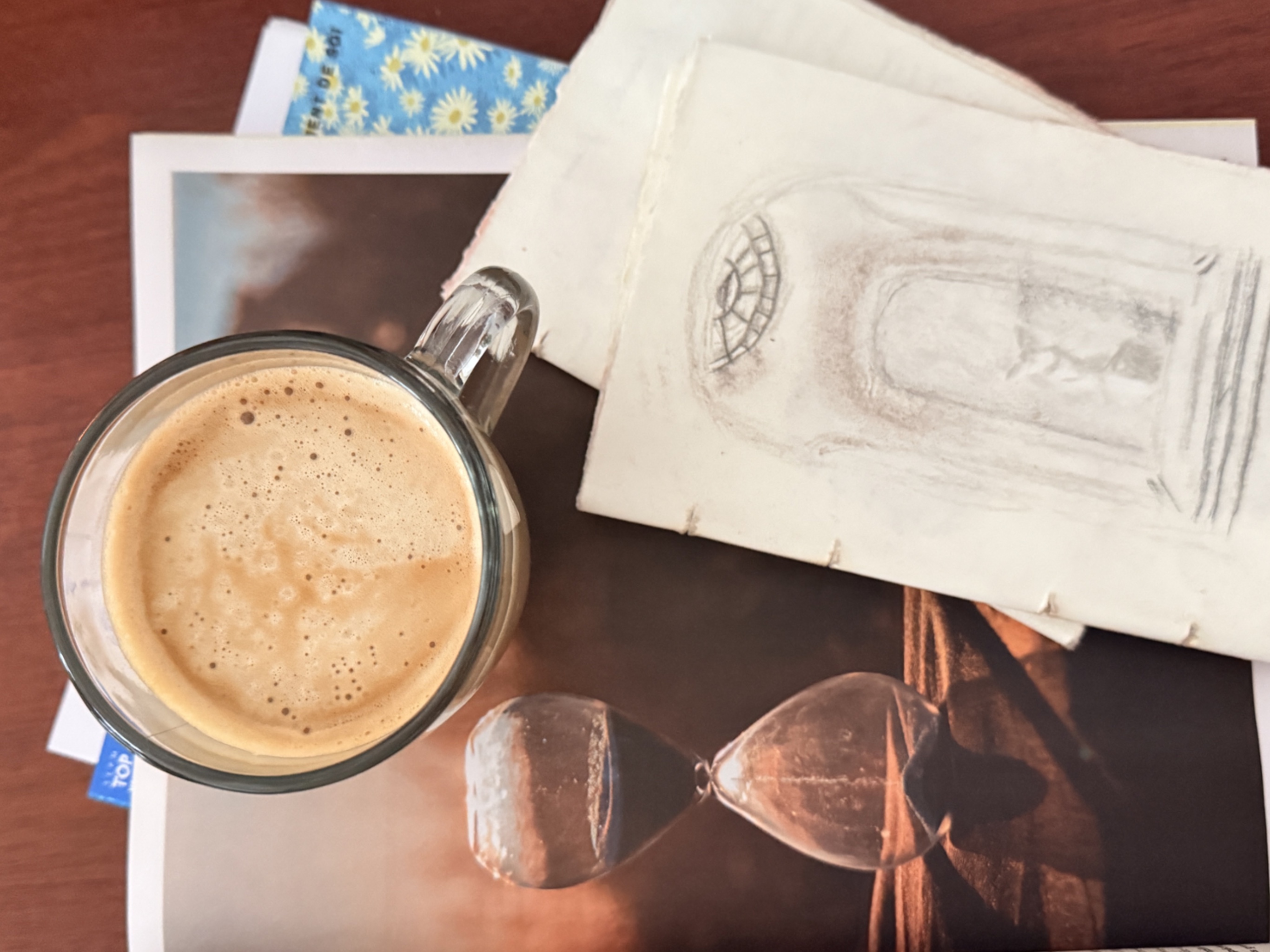
Keep a physical anchor for it. Something that lives at the front of whatever notebook or journal you’re already using — a postcard, a printed image, even a kept letter — so the current lens is the first thing you see each time you open it, not something you have to remember to return to.
Write one honest line a week, a first reaction, a fleeting feeling, whatever comes to mind first, raw, even if you disagree with it later. A year of these becomes its own small archive of how your eye and attention have actually changed, which is usually more interesting in hindsight than any single week’s insight.
That last point about the physical anchor is closer to home than I probably need to admit. My own copy of the latest mail club letter tends to live tucked into the first page of my Louis Carmen — the current thread of my own study is the first thing I see every time I open it. I’ve structured my study in way that makes sence with my work and life, and more often than not, the three merge together and I can’t tell which one is which. The thing is the result is united, the processes are most of the times seamless, and they don’t rely on my willpower alone to keep going. A monthly letter, and a quarterly, bilingual magazine pairing paintings with music, meditation, recipes, and a monthly planner — are both my way to document my study and practices, and a way to connect to you, and make my creations part of your calming moments’ collection.
Remember to take as much time as you need, and meet me at the next one.
Love, Evi