Some paintings are full of action: battles, storms, crowds. Others do almost nothing at all, and that's exactly why they hold us. Stand in front of them and the room seems to go quiet.
If you're craving stillness, these four are a good place to begin.
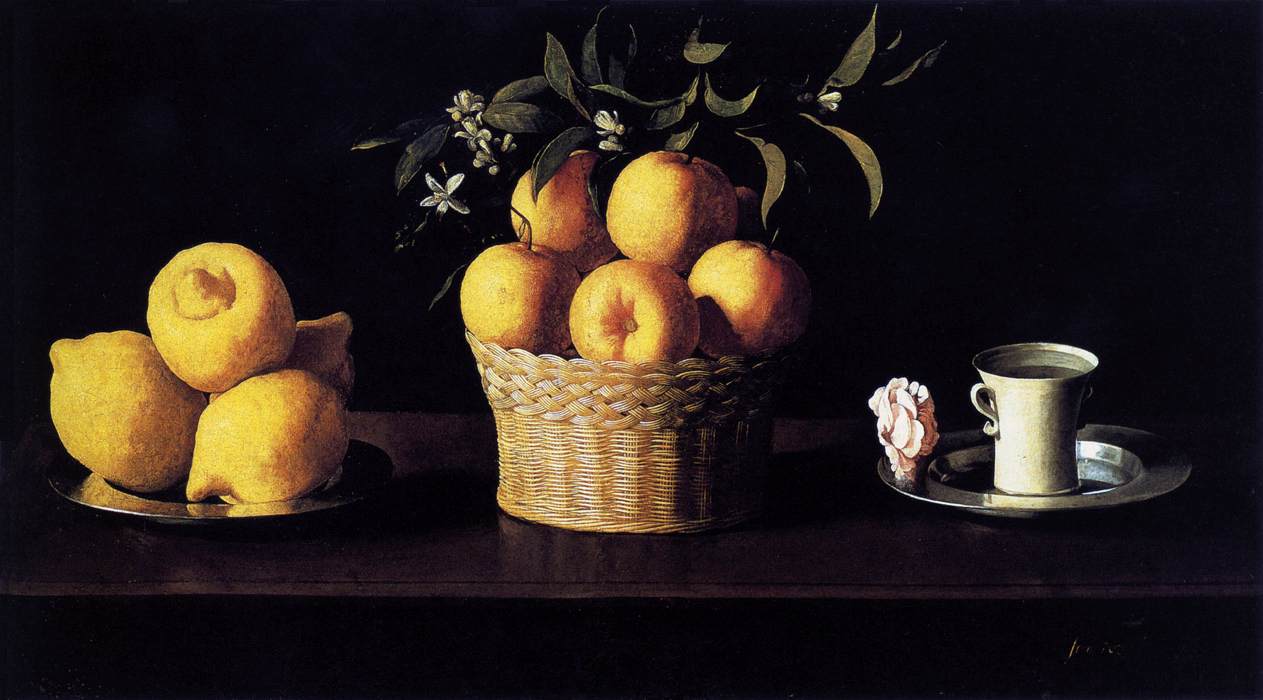
Francisco de Zurbarán, Still Life with Lemons, Oranges and a Rose (1633, Norton Simon Museum, Pasadena)
On a dark table, against a black background, three things in a row: a plate of lemons, a basket of oranges with blossoms, and a cup of water with a single rose on its saucer. Nothing touches. Nothing moves. Each object is lit as if it were sacred. It's a painting that teaches you how to give your whole attention to very ordinary things.
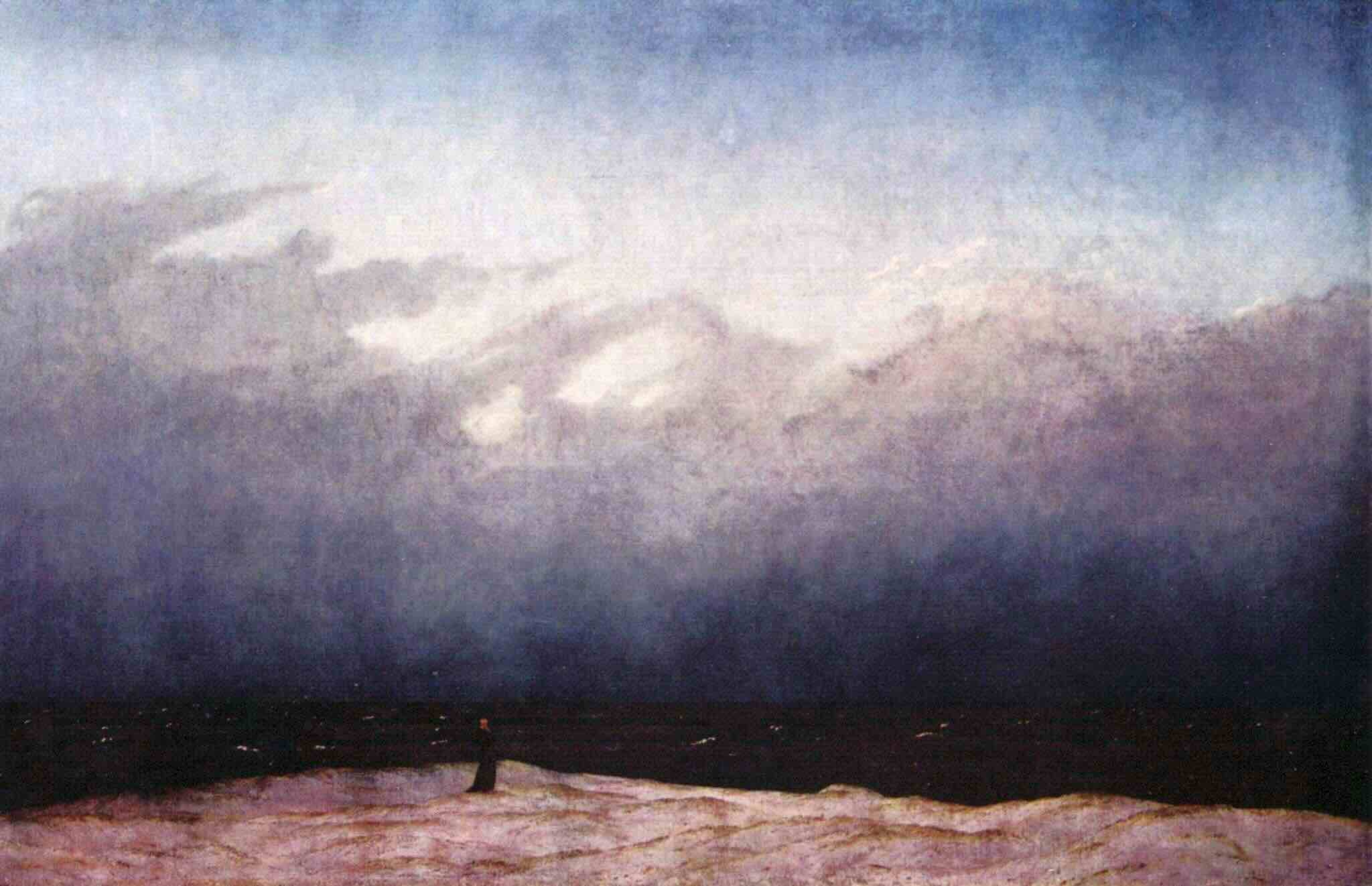
Caspar David Friedrich, The Monk by the Sea (1808–10, Alte Nationalgalerie, Berlin)
A tiny figure stands on a strip of pale sand, facing an immense dark sea and an even more immense sky. There are no boats, no horizon details, almost nothing to hold on to. When it was first shown, many viewers were unsettled by its emptiness. Today it feels like a picture of meditation itself: one small person, standing quietly before something vast.
If you like reading slowly, you'll like the welcome issue of “(meditating) On Art”: free to read on screen, with a meditation on receiving a letter.
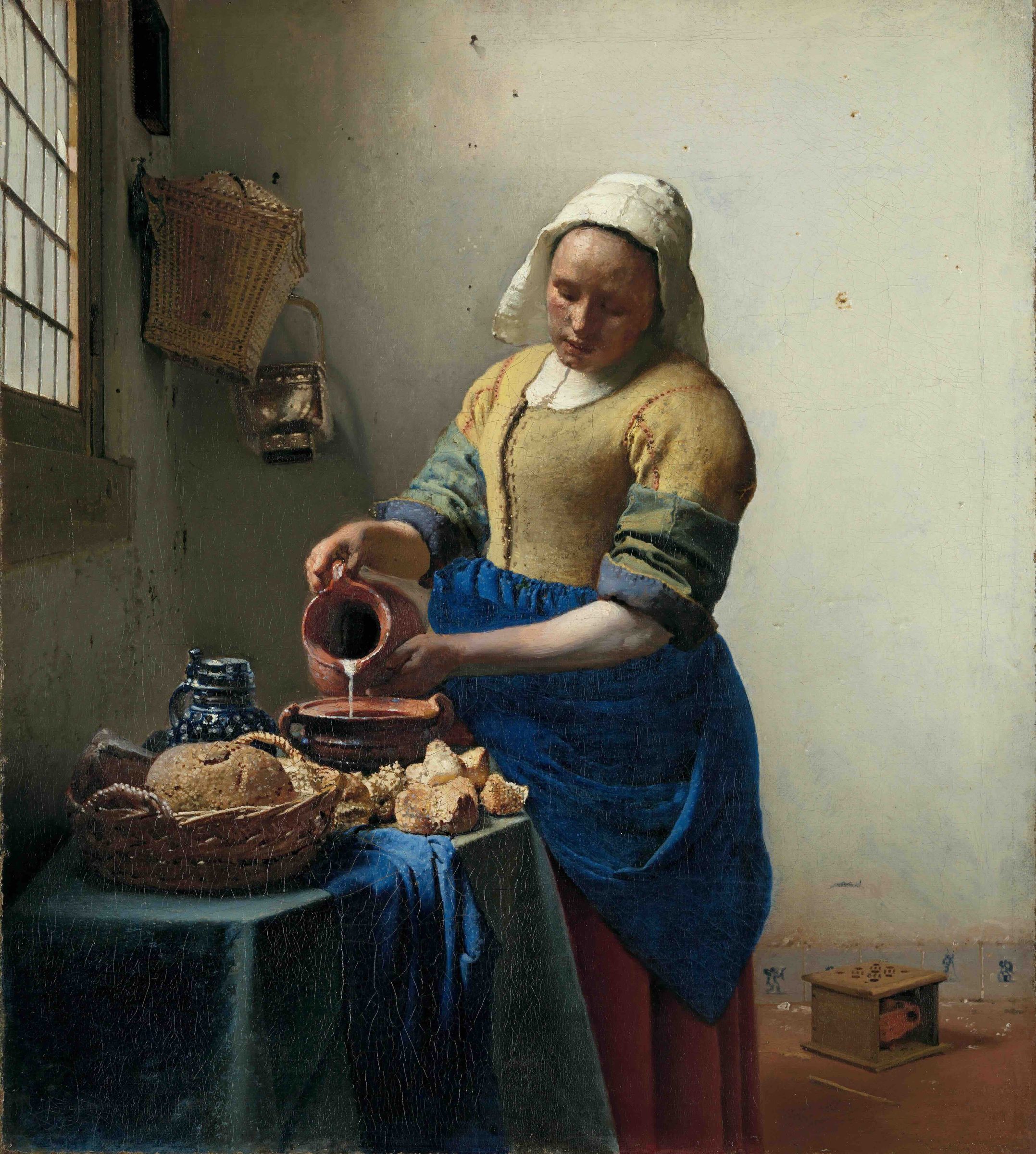
Johannes Vermeer, The Milkmaid (c. 1657–58, Rijksmuseum, Amsterdam)
A woman pours milk from a jug into a bowl. That's the whole story. But look at the thin, steady stream of milk, the light on the bread, the nail holes in the wall. Time seems to have stopped mid-pour. Vermeer turns a moment of housework into something close to prayer.
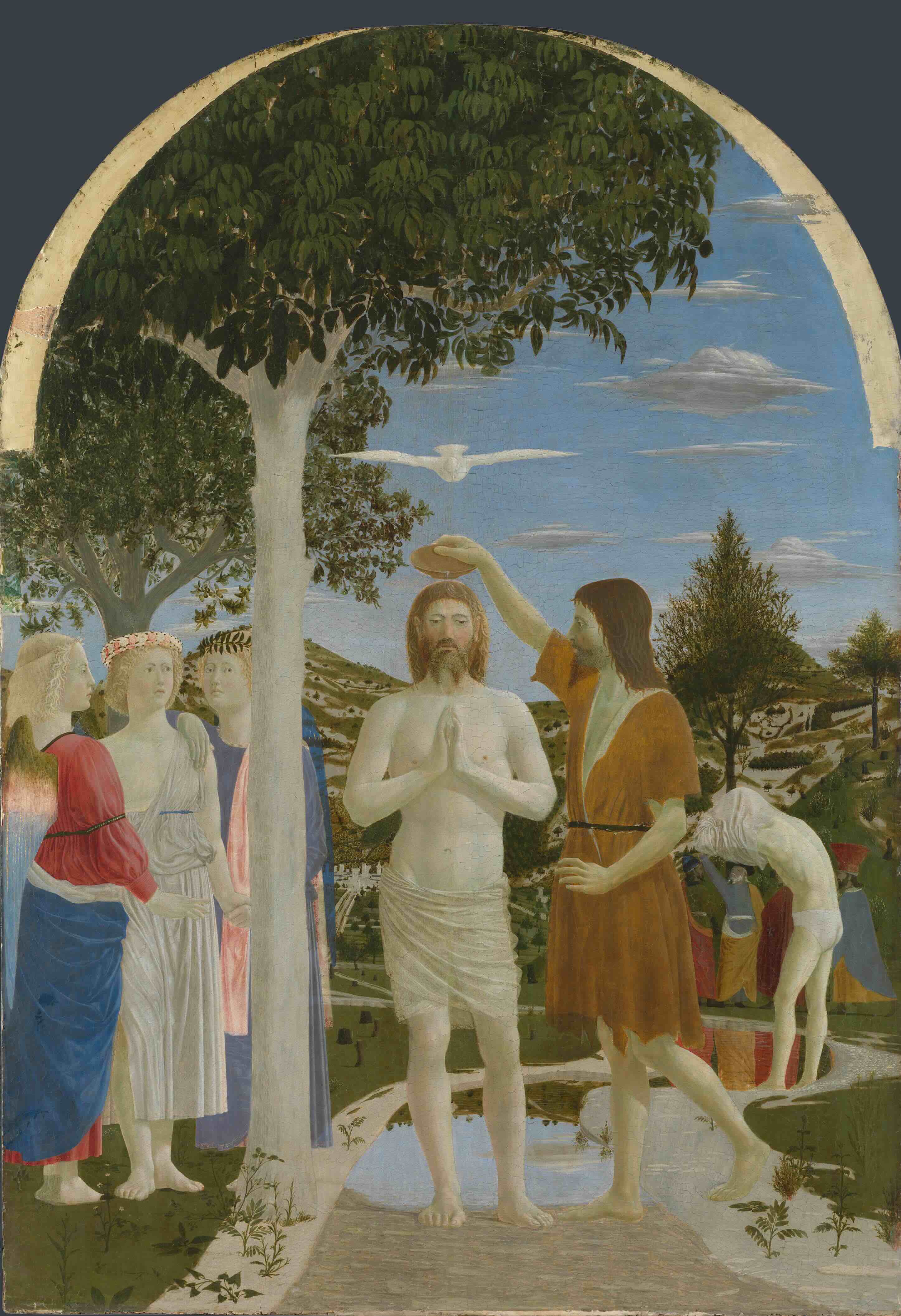
Piero della Francesca, The Baptism of Christ (1450s, National Gallery, London)
Pale light, clear water, a white dove hovering perfectly still above a calm figure. Whatever your beliefs, the painting has a rare quality of silence. The colors are soft, the figures composed, the whole scene suspended in morning air.
How to sit with stillness
Choose one painting and give it ten minutes. For the first two, just look. For the next three, notice your breath without changing it. Then let your attention rest on the stillest point in the painting: the rose, the monk, the stream of milk, the dove. Stay there. If thoughts come, let them pass like boats on Friedrich's empty sea.
Stillness, by post
If you'd like more moments like these, "(letters) On Art" brings them to your mailbox: a letter and a postcard every month, and each season the printed issue of "(meditating) On Art". A little stillness, delivered.
Remember to take as much time as you need, and meet me at the next one.
Love,