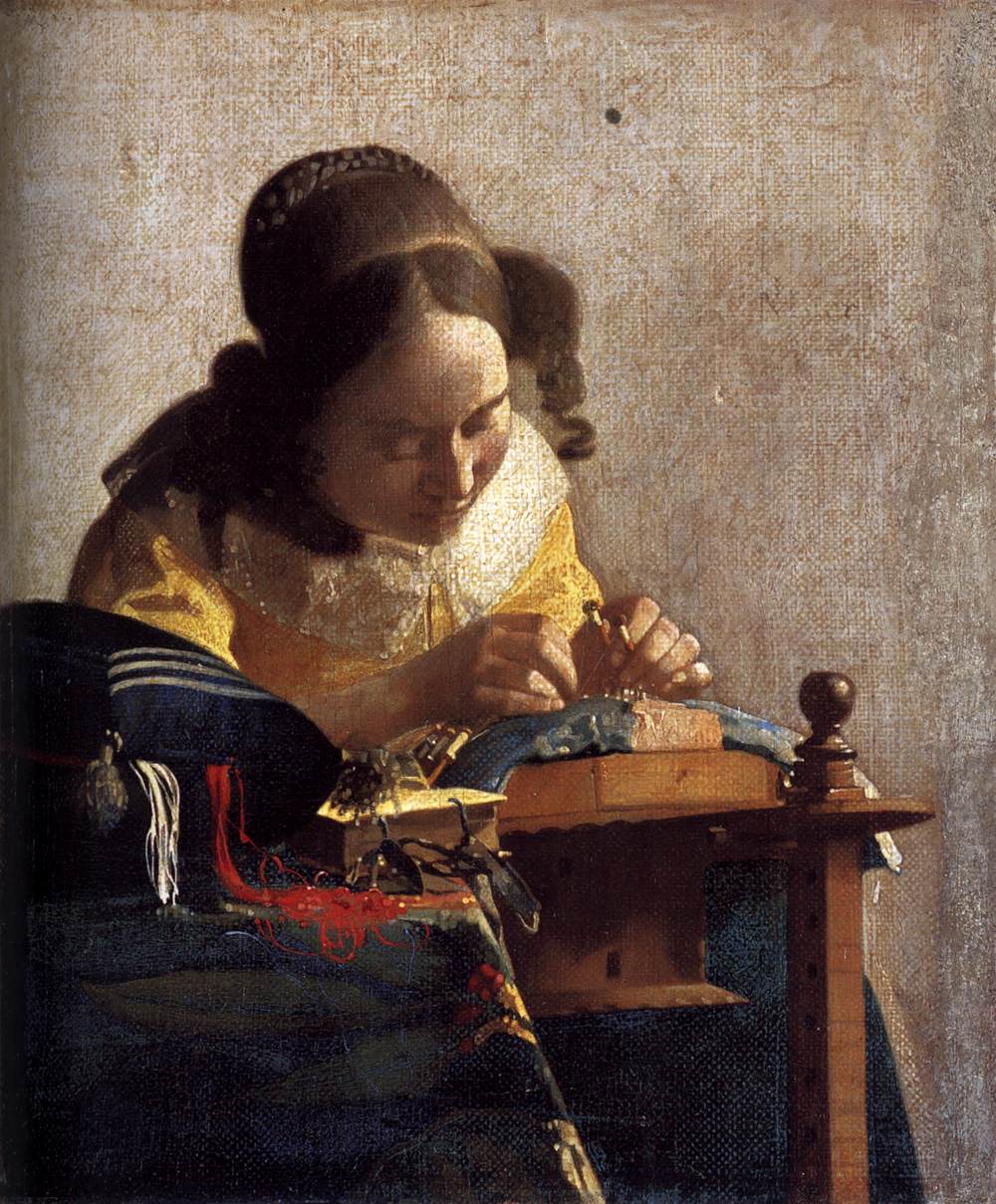
It's easy to walk past her. From a few steps away she is a warm patch of yellow on the wall, nothing more. Then someone stops, leans in, and suddenly the room feels quieter.
Vermeer's The Lacemaker measures about 24 by 21 centimetres, smaller than a sheet of printer paper. And yet it holds a whole world: the bent head, the threads pulled tight between her fingers, a spill of red and white thread falling from a sewing cushion as if it were liquid.
Small paintings change the way you stand
A large canvas asks you to step back. A small one asks you to step forward. You lower your voice without deciding to. Your shoulders drop. You stop scanning the room and start looking at one thing.
It's the difference between a speech and a whisper. Both can move you, but only one makes you lean in.
Collectors knew this centuries ago
In seventeenth-century Holland, many paintings were small on purpose. Collectors kept them in cabinets and studies, took them out, carried them to the window and looked for a long time. Painters like Gerrit Dou became famous for scenes so fine you had to be inches away to see them properly. These weren't lesser works. They were the private ones, the ones you lived with.
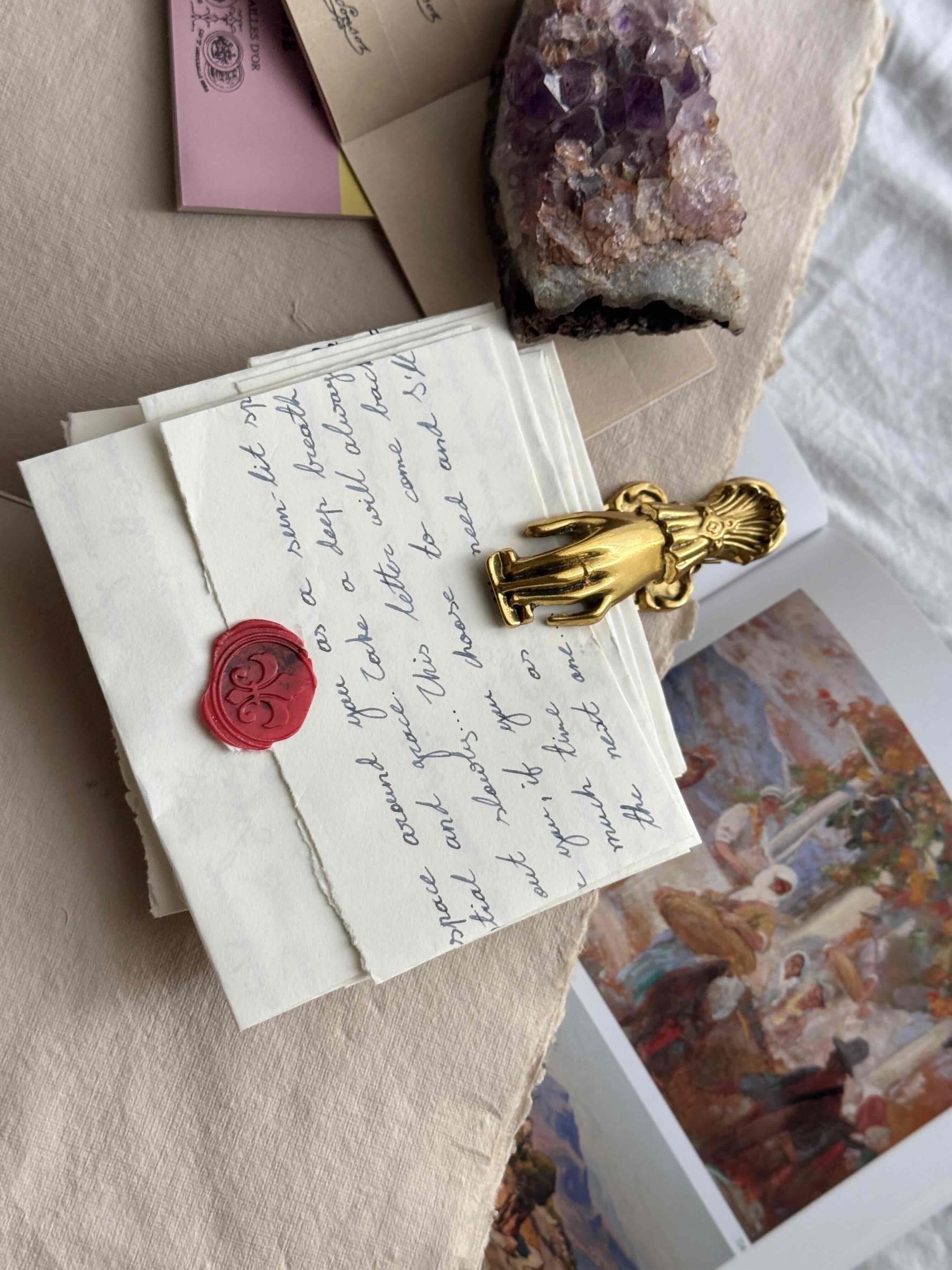
If you like reading slowly, you'll like the welcome issue of “(meditating) On Art”: free to read on screen, with a meditation on receiving a letter.
A whole exhibition on cigar-box lids
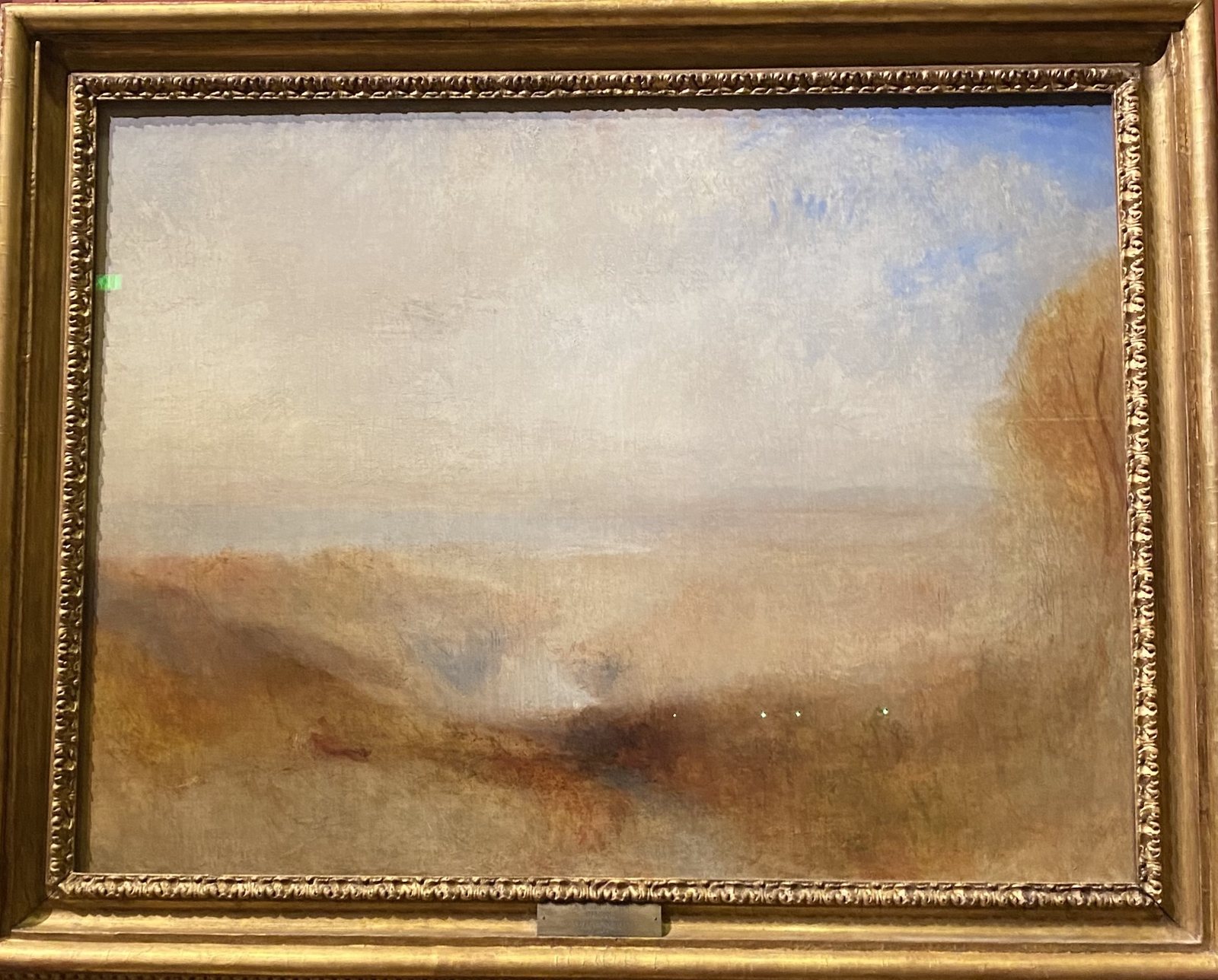
In Melbourne in 1889, a group of young painters, among them Tom Roberts, Arthur Streeton and Charles Conder, held what they called the 9 by 5 Impression Exhibition. Many of the paintings were made on wooden cigar-box lids, nine by five inches. The critics were not kind. Today those little panels are treasured, partly because they feel so close to the moment they were painted: a beach, an afternoon, a light that was gone an hour later.
What a small painting gives you at home
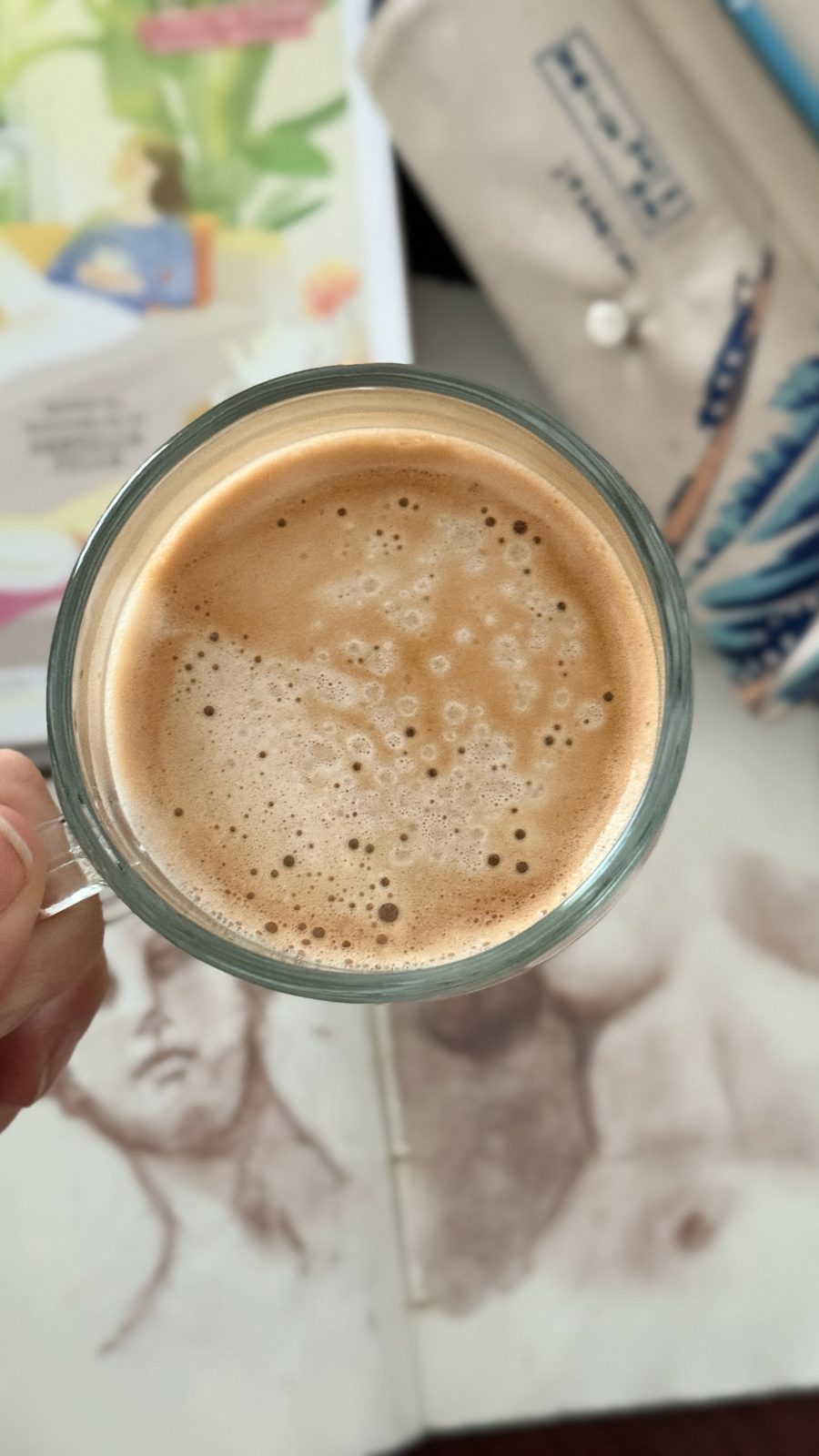
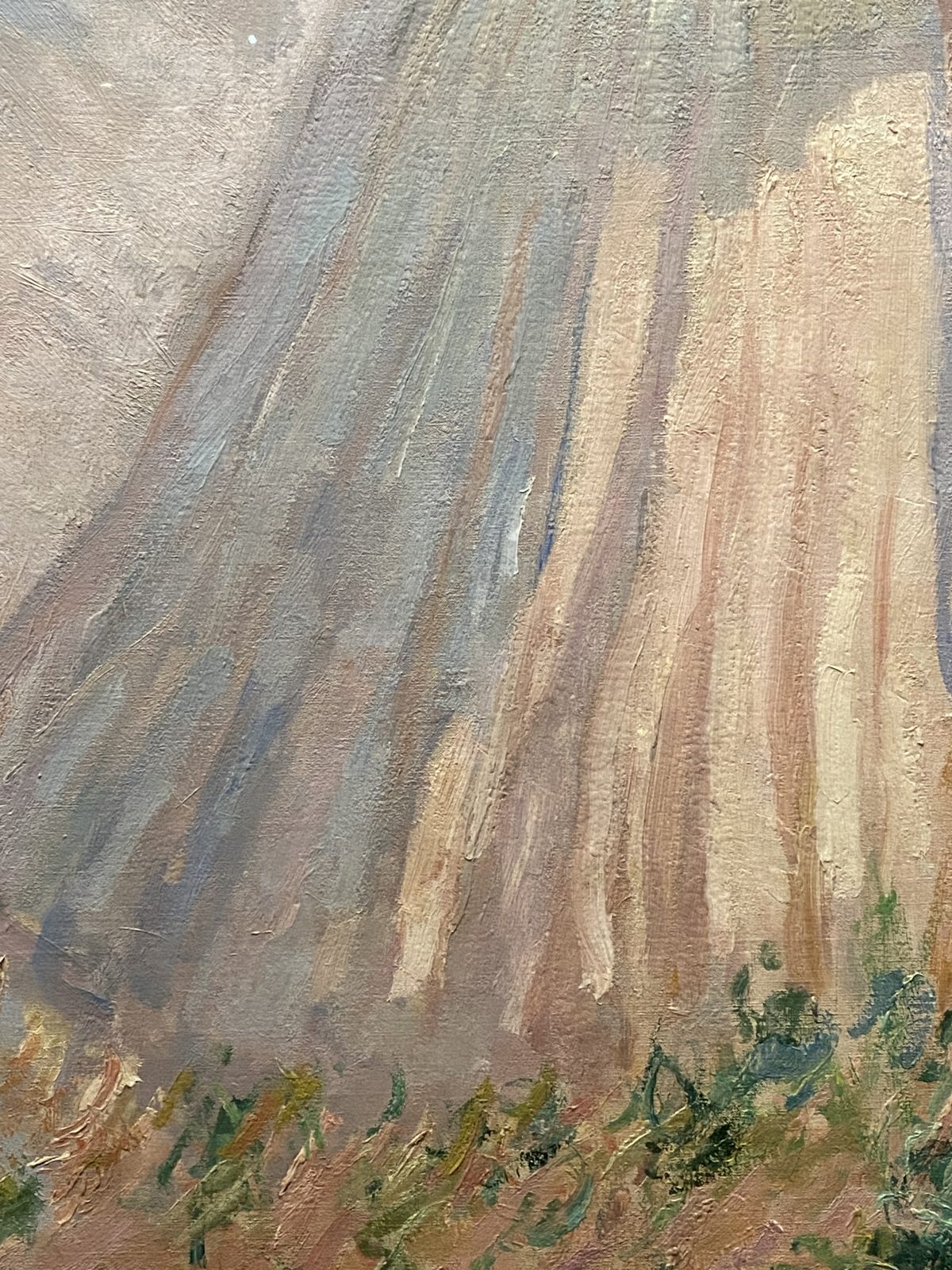
A small painting doesn't need a wall. It can lean against a few books, sit on a desk, wait beside your coffee cup. It doesn't decorate a room so much as keep you company in one corner of it. You can pick it up. You notice it differently on a grey Tuesday than on a bright Sunday morning.
That is the quiet power of small: it fits into the life you already have.
A tiny original for the first year
This is why, in the first year of "(letters) On Art", every founding member receives a tiny original: a small oil painting by my hand, somewhere between a business card and a postcard in size, one of a kind. Anyone who subscribes for a year before December 2027 receives one, posted with the magazine from March 2027. Something to carry to the window, the way those Dutch collectors did.
Remember to take as much time as you need, and meet me at the next one.
Love,