Think of the margins of your old school notebooks. The spirals, the shaded boxes, the stars drawn over and over while someone talked about something else. You weren't trying to make art. You were, without knowing it, meditating.
Mark making is simply that: making lines and marks on paper, with no intention of drawing anything. It may be the kindest practice there is for anyone who can't stand doing something badly.
Kandinsky took a line seriously
Wassily Kandinsky spent years thinking about what a single point or line can do. In his book Point and Line to Plane, he treated them almost like musical notes, each with its own tension and character. Look at Composition VIII and you can feel it: lines that hurry, lines that rest, circles that seem to hum.
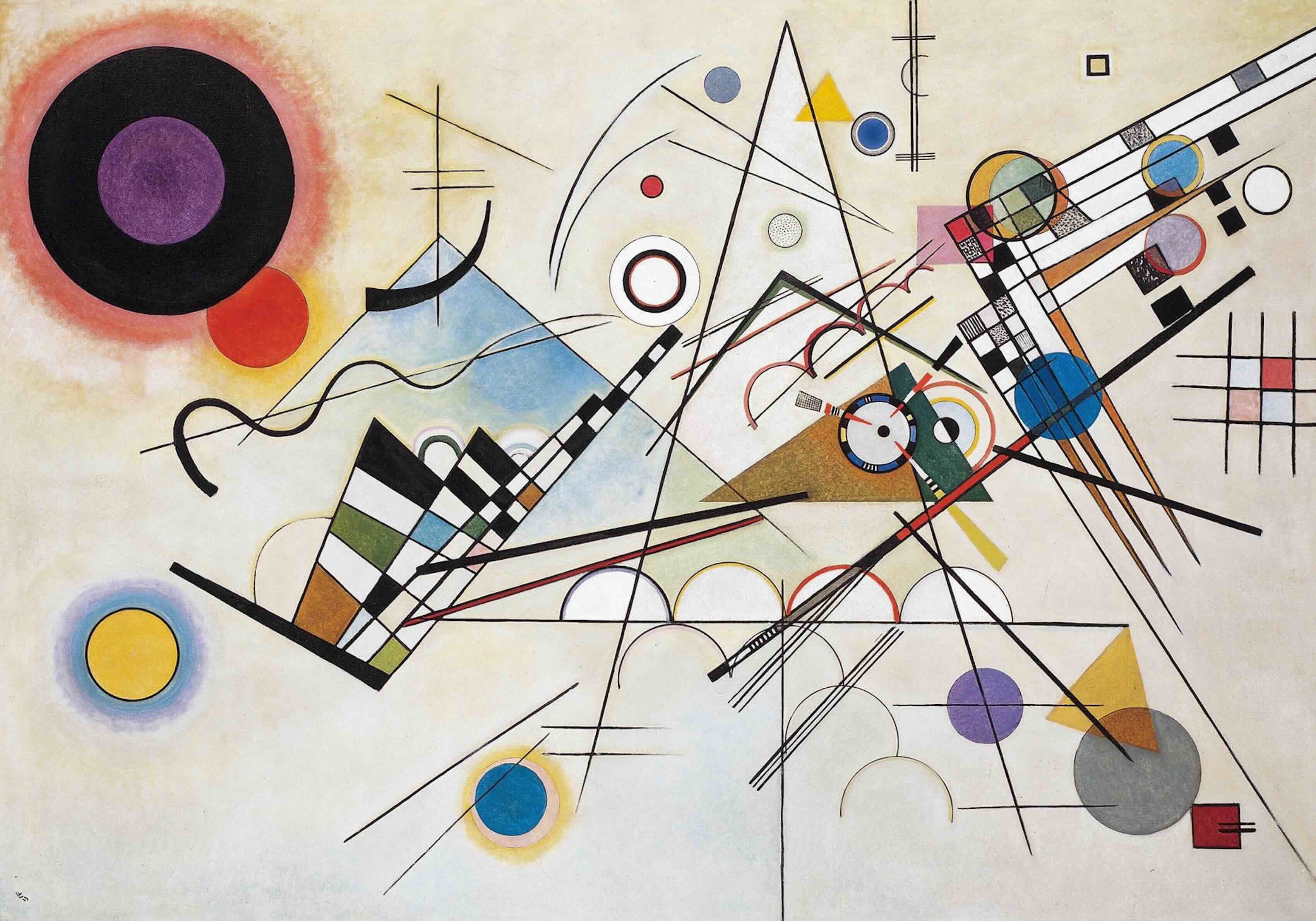
Wassily Kandinsky, Composition VIII, 1923. Solomon R. Guggenheim Museum, New York
You don't need his theory. You only need to borrow his attention.
What you need
Paper you don't care about (the back of an envelope is perfect), and anything that makes a mark: a pencil, a pen, a crayon from the bottom of a drawer. Ten minutes.
Three ways in
- Rhythm. Draw the same simple mark again and again: circles, parallel lines, small waves. Draw one line as you breathe in and another as you breathe out. Within a minute or two, the repetition starts to quieten the mind.
- Wandering. Put the pen down and let it travel without a plan. Don't steer towards a shape. If a face or a flower appears, let it, then keep going.
- Feeling. Choose your tool by your mood: a soft pencil for tender days, a bold marker for loud ones. Let the pressure, speed and direction of the marks say what you feel, without explaining it.
When your inner critic speaks
It will. "That's ugly." "That's pointless." Notice it, the way you'd notice a car passing outside, and go back to the sensation: the scratch of graphite, the slight drag of paper, the movement in your wrist and shoulder. If you've tried contour gazing, you'll recognise the feeling. The page isn't being judged. Neither are you.
Then, look at it like a painting
When you stop, step back. Hold the page at arm's length, or turn it upside down. What do you see? Where is it busy, where is it calm? Does it look like your week?
This is the same way of looking you can bring to any abstract work. And it's a reminder that doing one thing at a time can be as small as one line.
Marks that became a garden
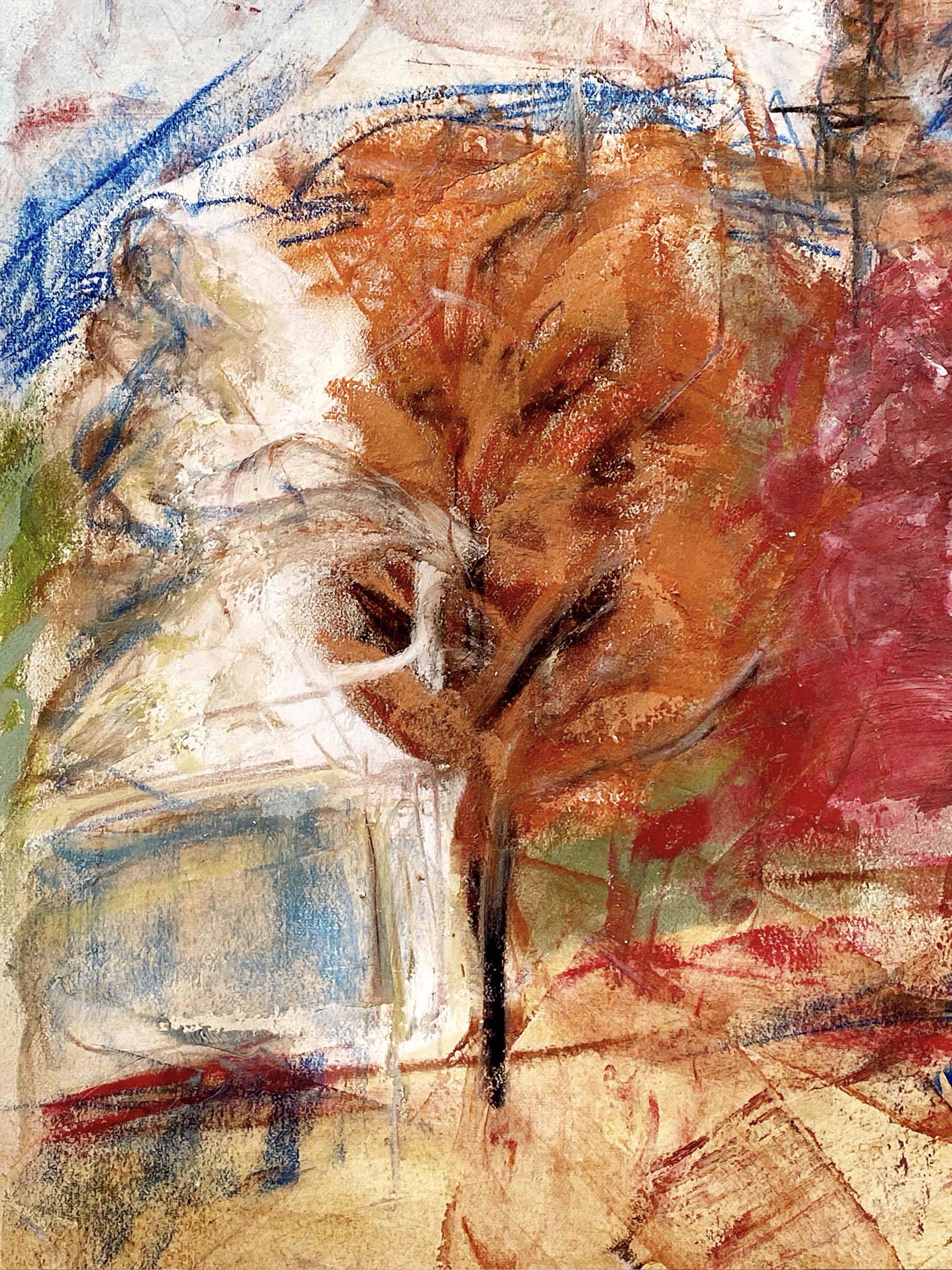
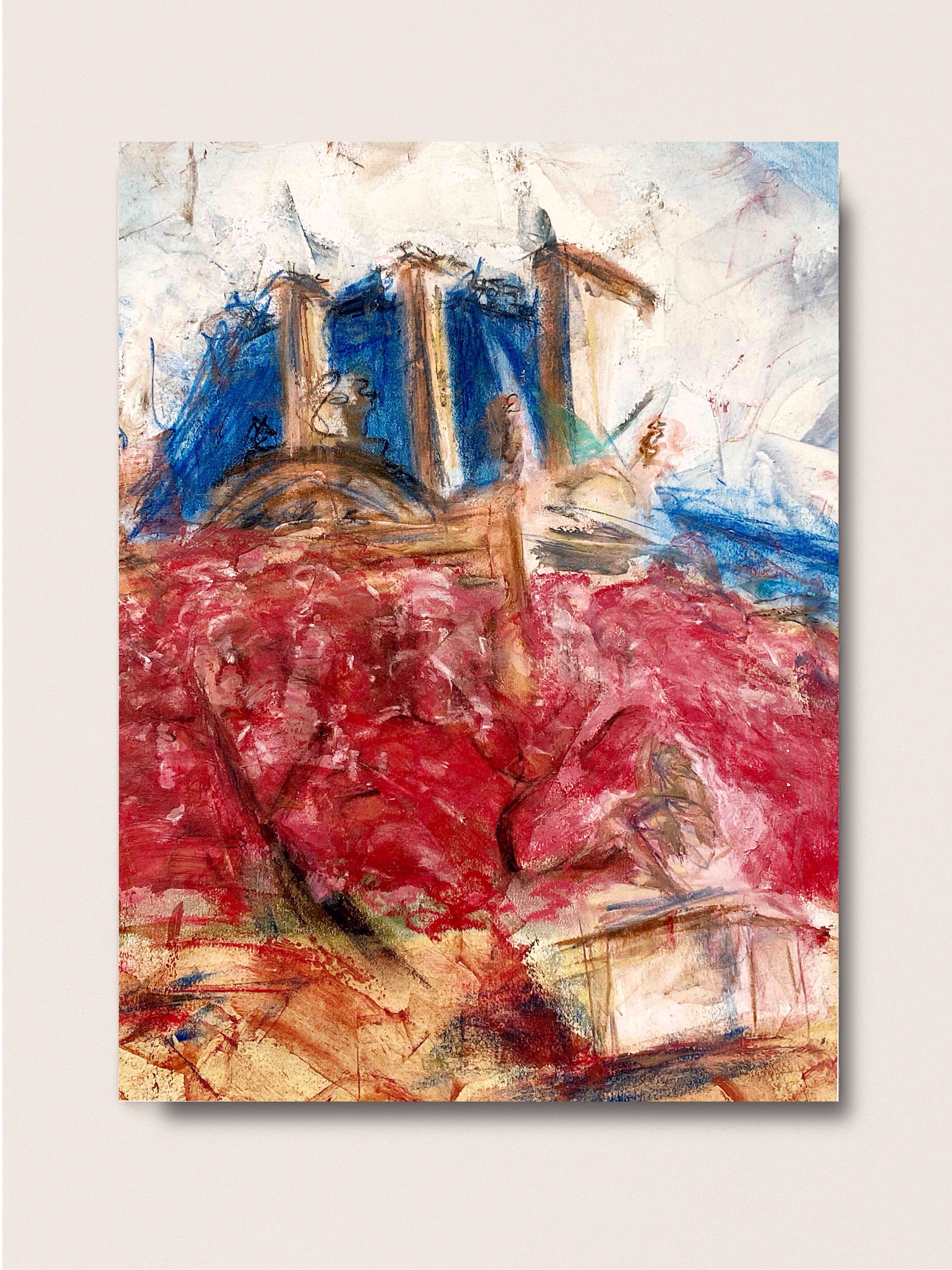
My Tuileries prints began this way: a deconstructed, expressive, slightly messy image of the Jardin des Tuileries in spring. Some people see the trees and the statues; others see a ship on pink water. I love that I'm not allowed to tell them they're wrong. Each print is hand-finished and signed, and comes with a meditation letter.
Remember to take as much time as you need, and meet me at the next one.
Love, Evi