
As a child, whenever we went to church, I spent the whole service looking up. Saints in gold, a face in the dome, painted skies I couldn't reach. I didn't understand most of it. It was like reading a story without words.
I still do it. And I've noticed that almost no one else does.
Why we forget to look up
We move through cities and museums at eye level: paintings, signs, faces, screens. Ceilings sit just outside that frame, so we walk under some of the most ambitious art ever made without seeing it. Looking up is a small act of slowing down. You literally can't do it while rushing.
Three Paris ceilings worth a stiff neck
The Palais Garnier. In 1964, Marc Chagall's colourful ceiling was installed in the auditorium, floating dancers, angels and Paris landmarks around the great chandelier. The original 19th-century ceiling still exists underneath it. Two centuries of taste, stacked one above the other. (Going for the first time? Here's a beginner's guide to the ballet at Garnier.)
The Galerie d'Apollon at the Louvre. Gold everywhere, and at its centre, Eugène Delacroix's Apollo Slaying the Python, finished in 1851: light defeating darkness, painted for a ceiling.
Le Train Bleu, at the Gare de Lyon. A station restaurant opened in 1901, where painted views of the cities the trains once reached cover the walls and ceilings. You can sit beneath them with a coffee before a journey, or without one.
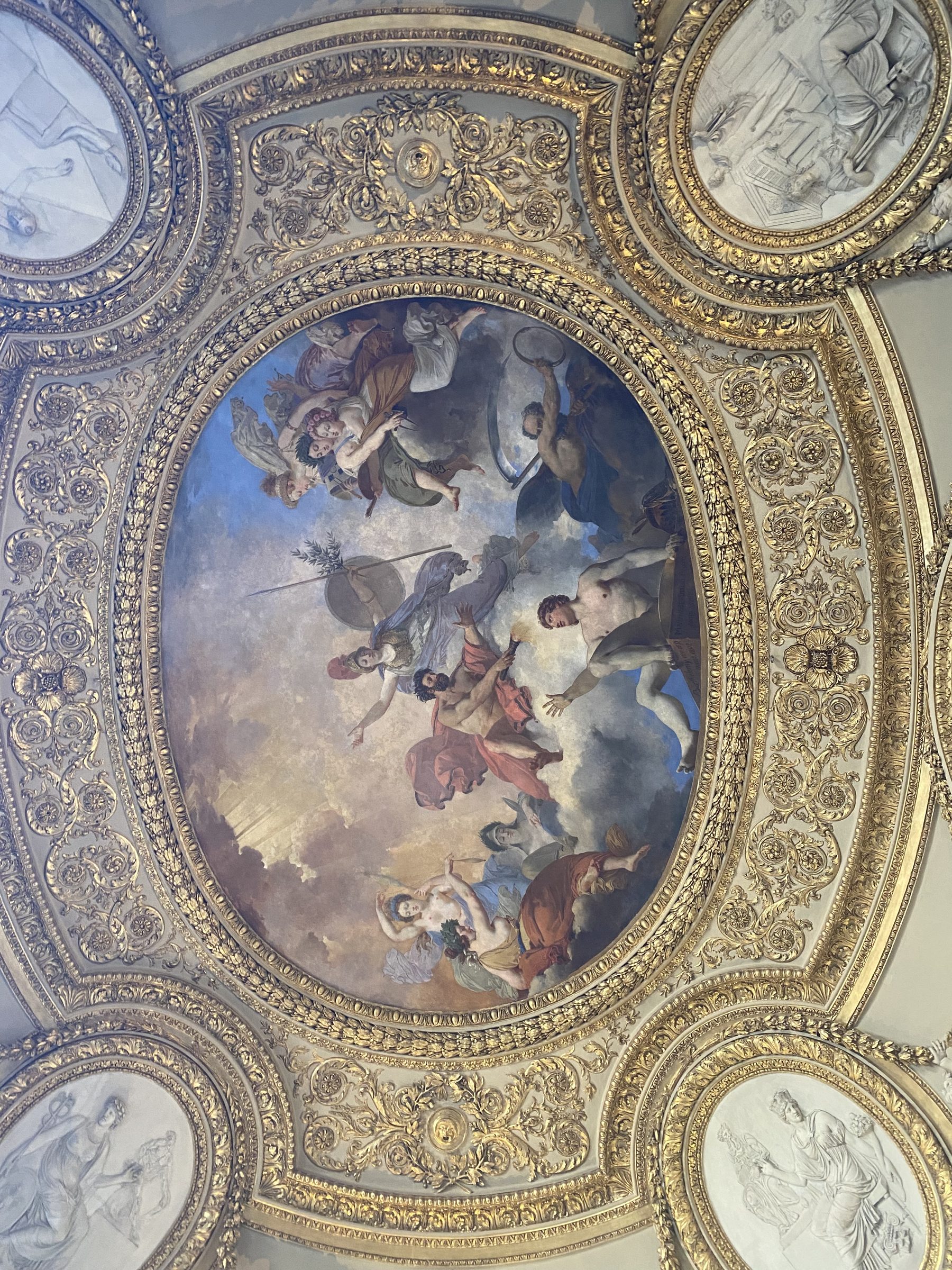
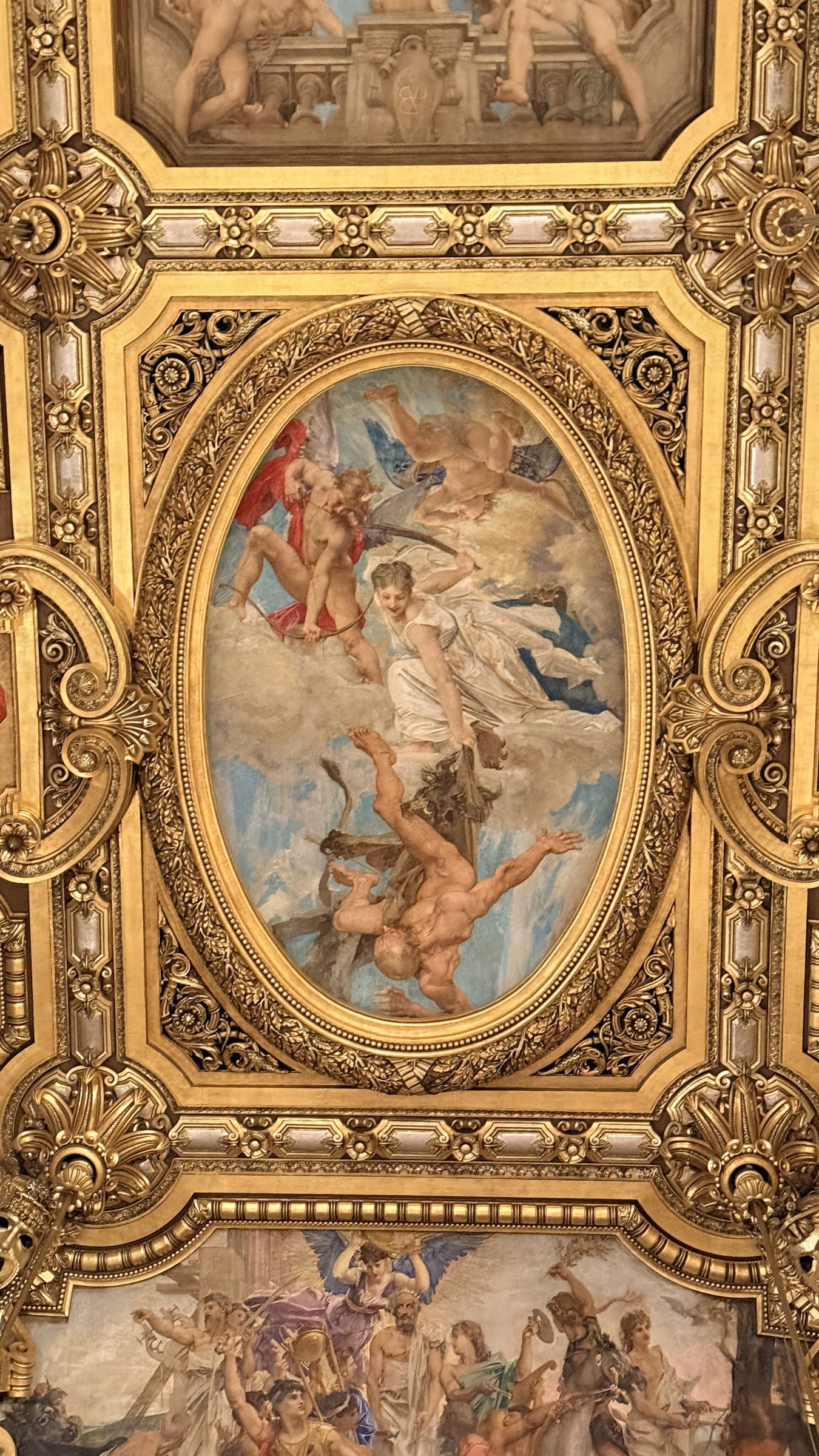

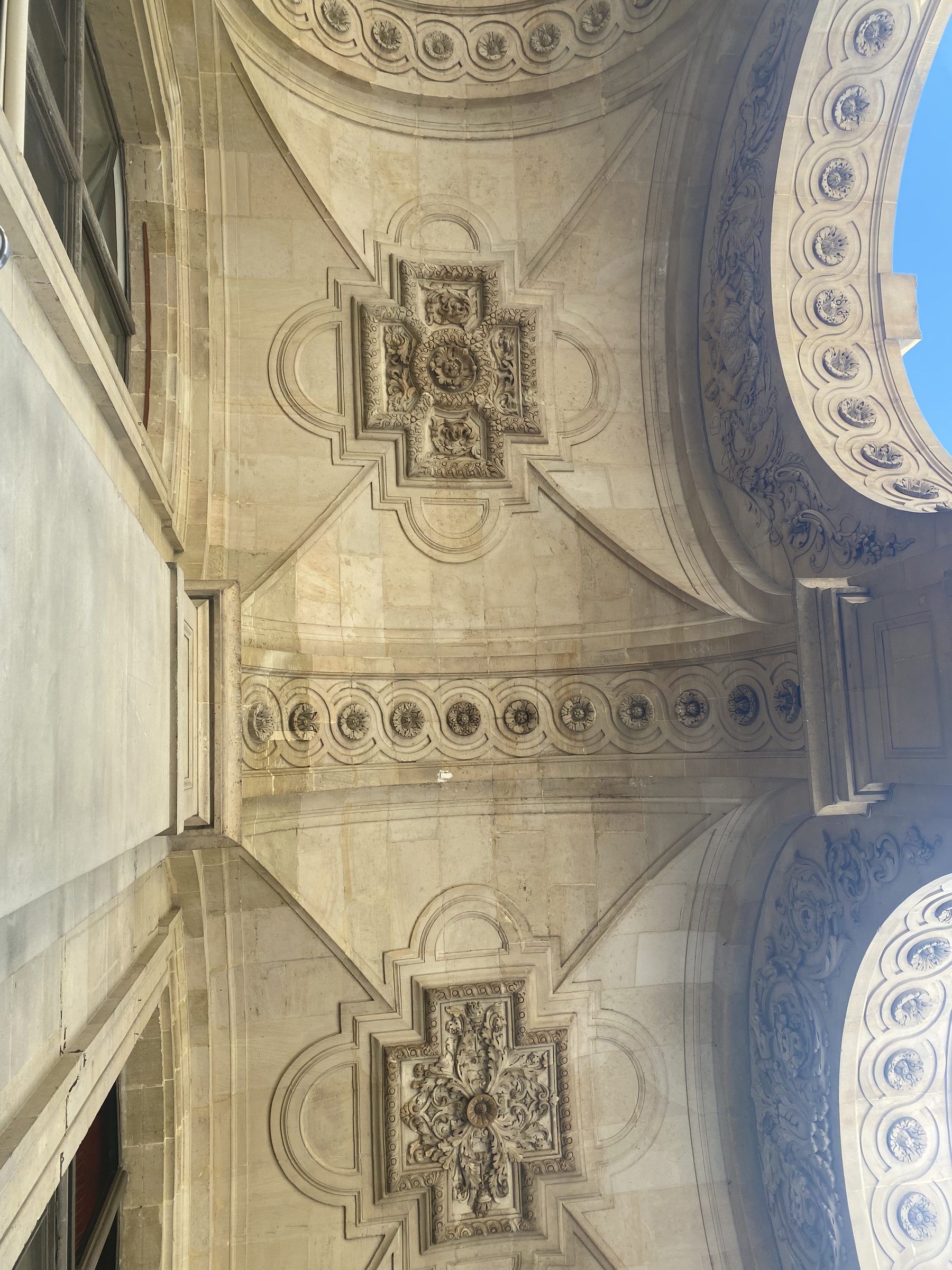
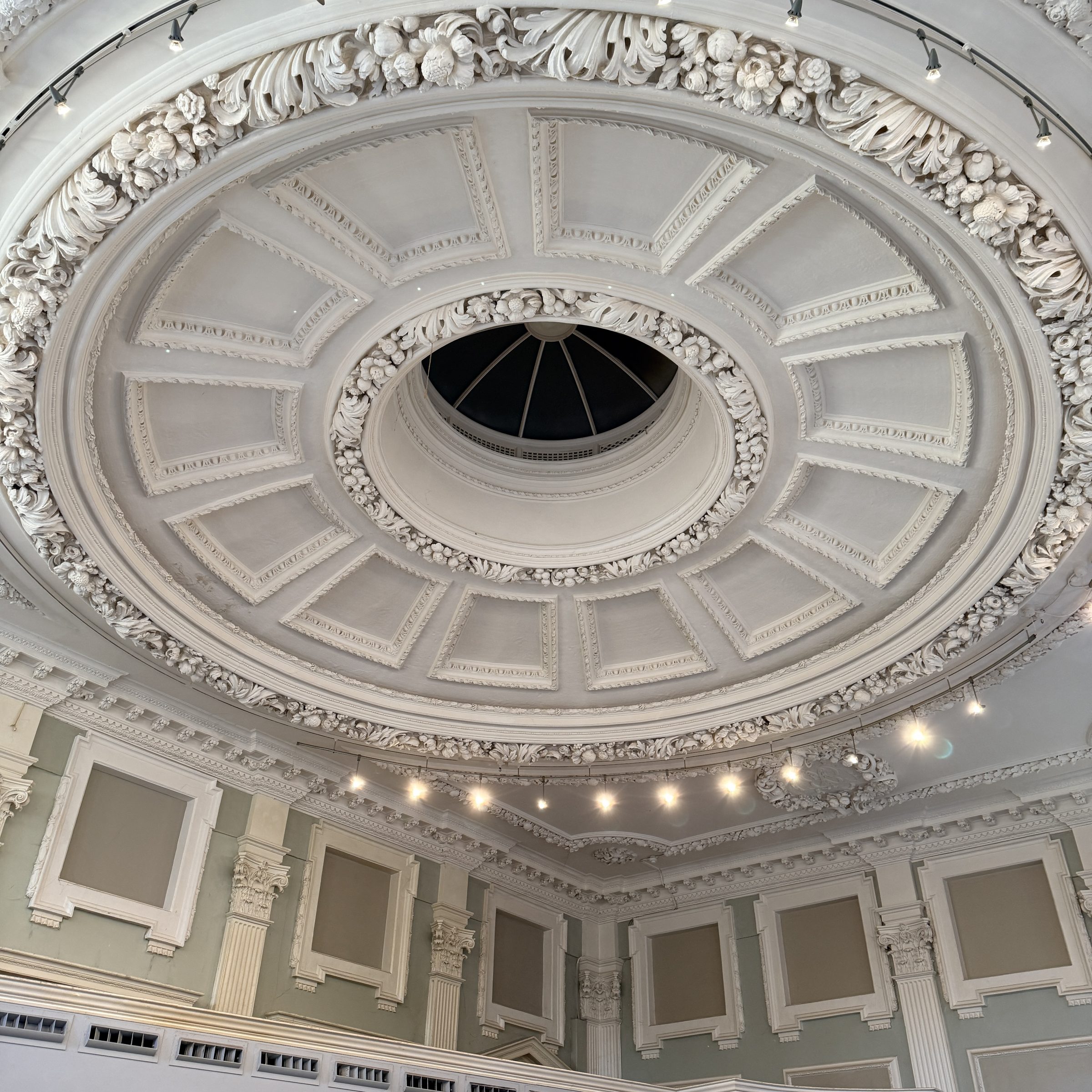
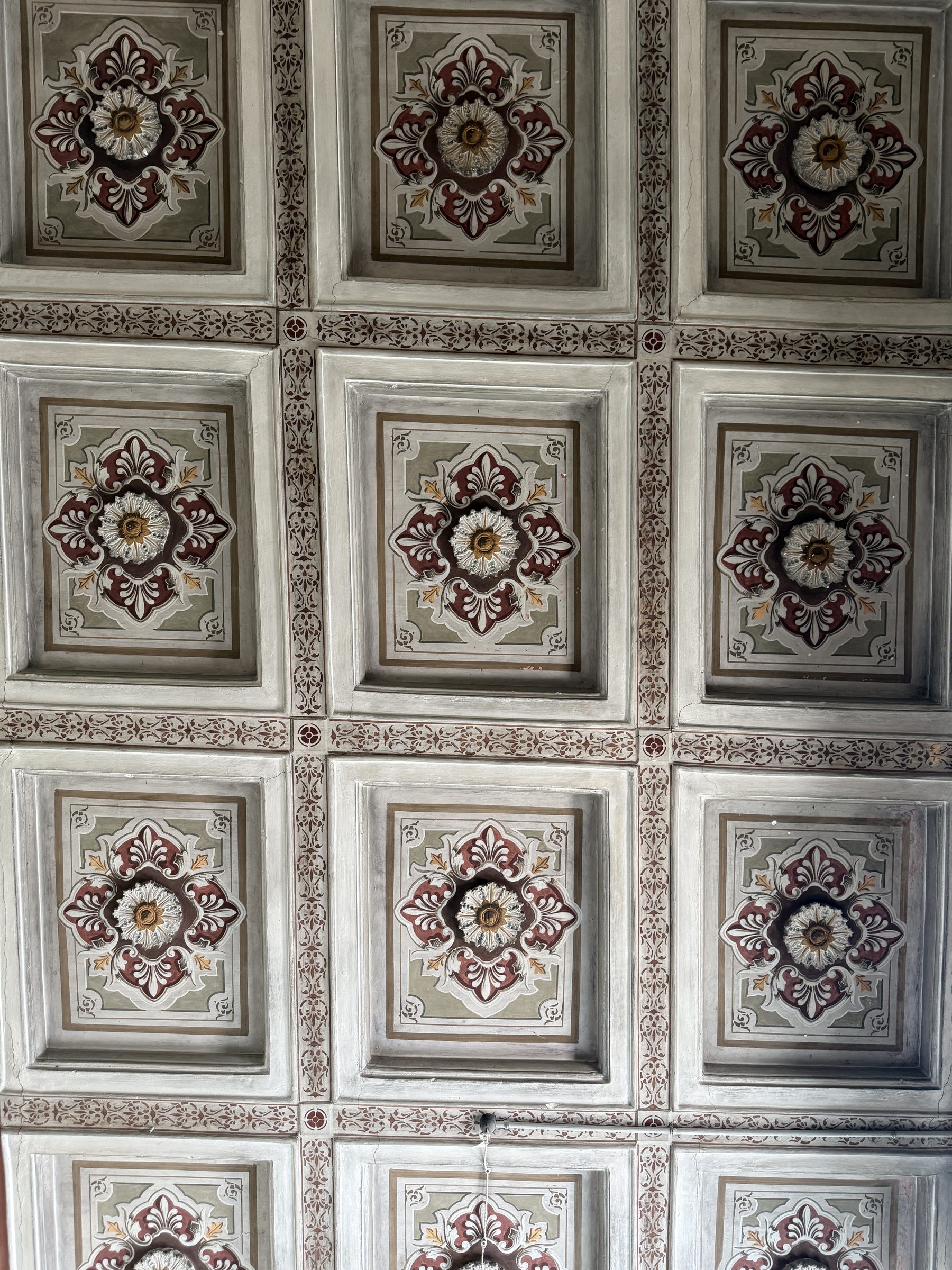
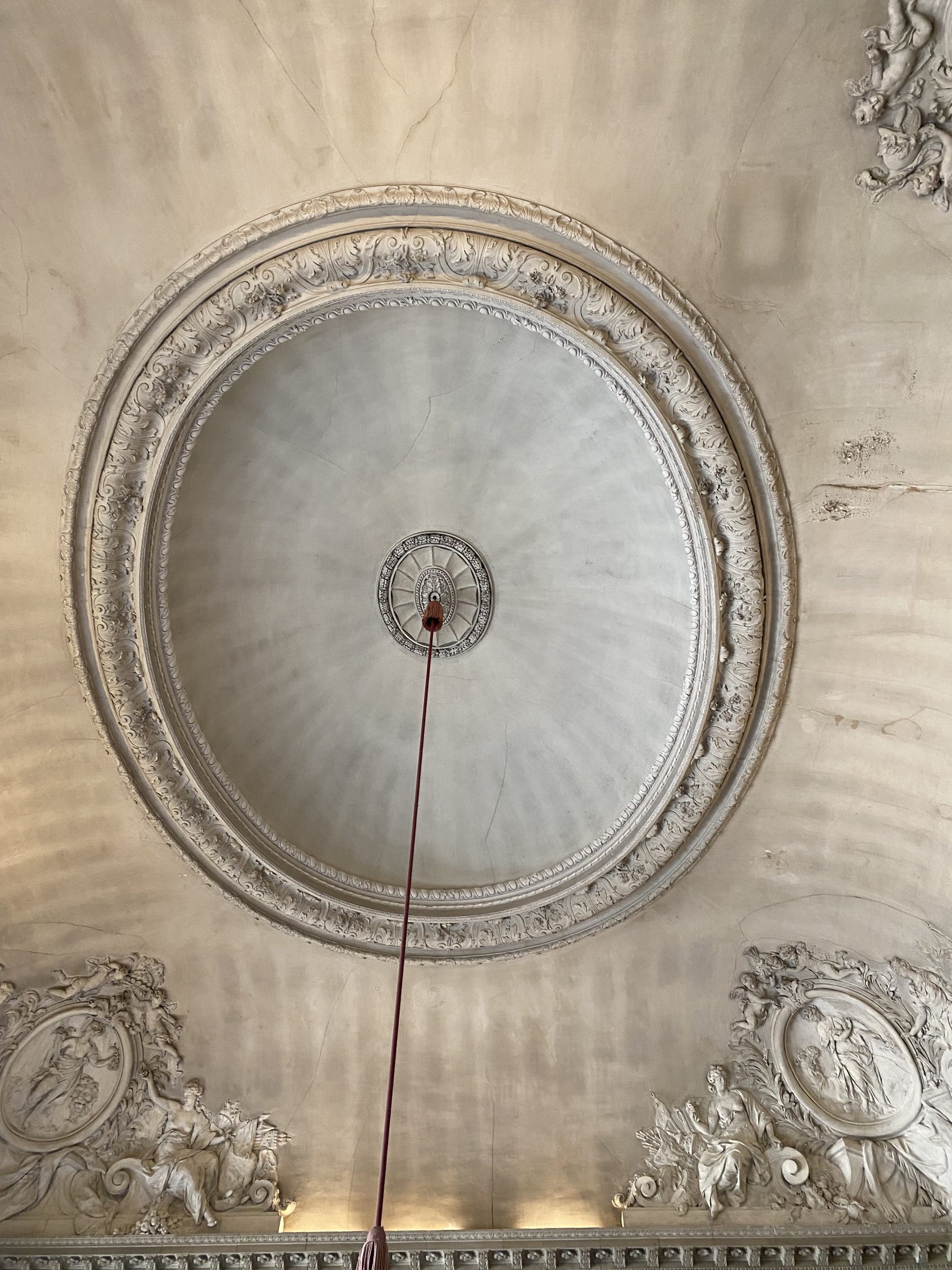
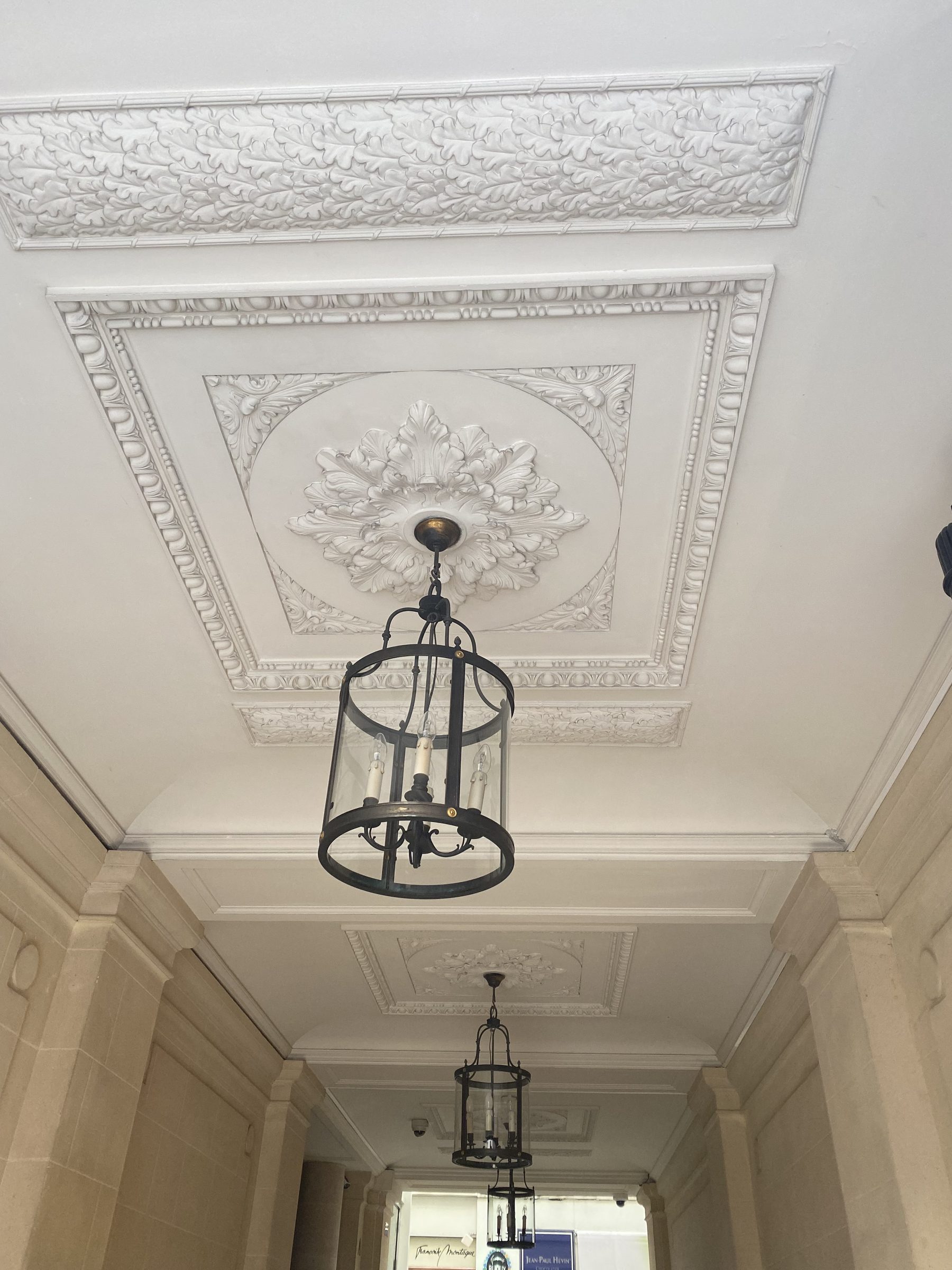
Ceilings I've stopped under: the Palais Garnier, a café under the arcades of the Louvre, Marie Antoinette's apartments at Versailles, a doorway on rue Saint-Honoré, a house in Syros and a café in York. Photos © Evi Michailidou
A three-minute practice: look up
Try it in a museum, a church, a station, or simply your own room.
- Find somewhere to sit or stand safely. Let your shoulders drop.
- Tilt your head back slowly. Let your eyes wander, as if the ceiling were a sky.
- Don't try to understand the story. Follow colours, lines, cracks, light.
- Breathe a little slower than usual. Notice the space above you, how high it goes.
- Lower your gaze gently and notice how the room feels now.
At home, an ordinary ceiling works too. A crack can be a river. A shadow can be a cloud.
If you love quiet rooms like these, here are Paris's quietest museums.
Keep what you discover
The Collector's Diary is a free printable zine for remembering your encounters with art: where you found it, what you noticed first, how it made you feel. Ceilings count.
Remember to take as much time as you need, and meet me at the next one.
Love, Evi