Five o'clock, and it's already dark. The street lamps come on one by one, the windows across the road turn gold, and the city goes soft and blue at the edges.
In the 1870s, an American painter living in London spent his evenings on the banks of the Thames, watching exactly this. Then he went home and painted it from memory.
Painting the river at dusk
James McNeill Whistler called these paintings nocturnes, borrowing the word from music. He wanted them to work like a piece by Chopin: not a story, not a view, but a mood. He thinned his paint until it was almost liquid and laid it on in veils, so the canvas seems to breathe.
In this one, the Thames at Chelsea is almost all mist. A barge, a few faint lights on the far bank, and one tiny figure on the shore, looking at the same water we are.
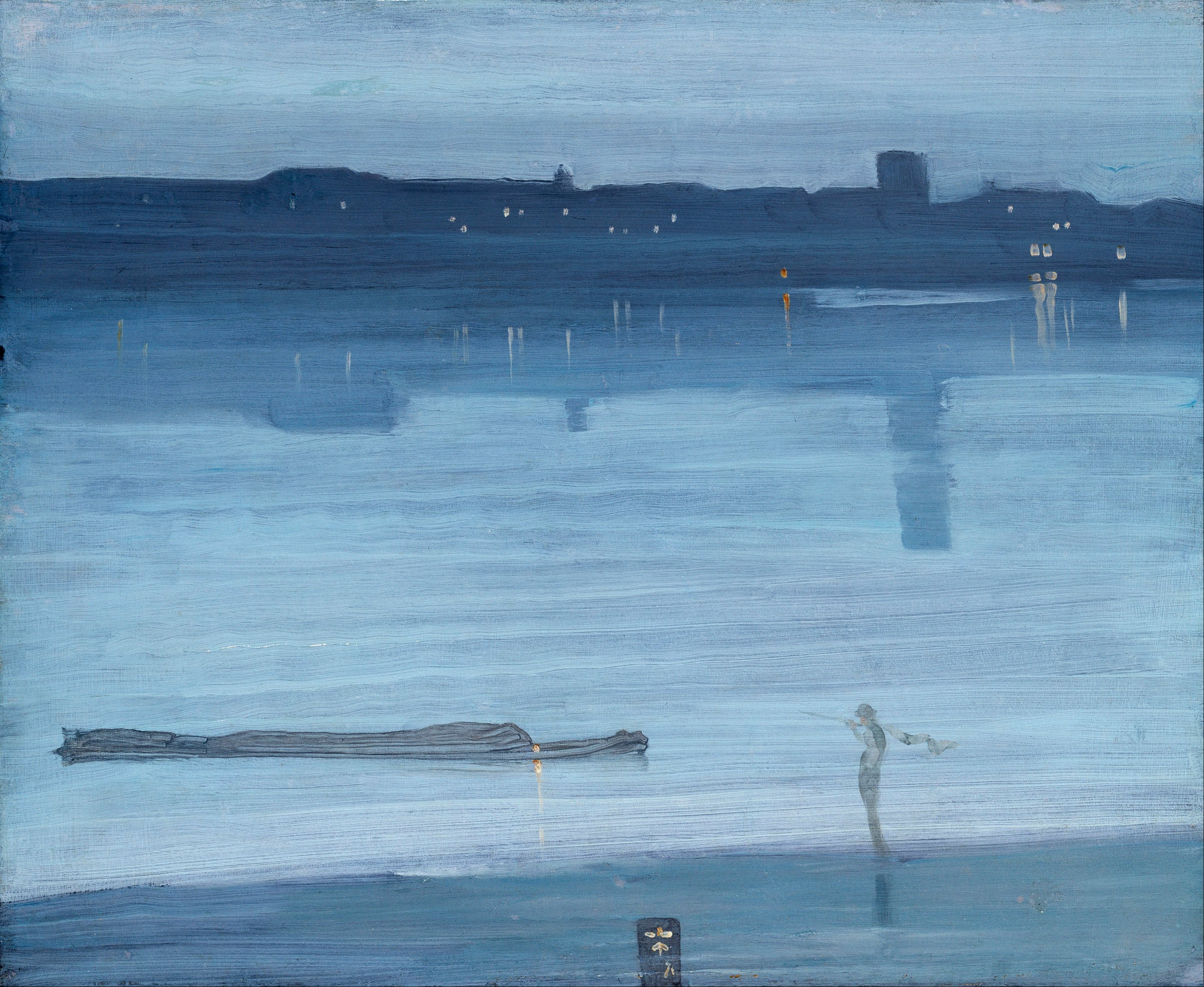
James McNeill Whistler, Nocturne: Blue and Silver – Chelsea, 1871. Tate Britain, London
The scandal
Not everyone saw a mood. In 1877, the most powerful critic in Britain, John Ruskin, saw Whistler's Nocturne in Black and Gold: The Falling Rocket, a night sky scattered with fireworks, and accused him of asking two hundred guineas for flinging a pot of paint in the public's face.
Whistler sued him for libel. In 1878 he won, but the jury awarded him a single farthing, the smallest coin in the realm, and no costs. The trial helped ruin him; he was declared bankrupt the following year.
The story goes that he wore the farthing on his watch chain.
A nocturne meditation for winter evenings
- At dusk, turn off the lights in one room and sit by the window.
- Look out without focusing on anything. Let the shapes outside blur into masses of colour.
- Count the lights you can see: windows, lamps, the red of a car. Then let the counting go.
- Notice the blues and greys. How many can you find?
- Breathe slowly and let the room grow darker around you. When you're ready, switch on one small lamp, and notice how warm it feels.
For more quiet paintings, here are calming paintings to look at before sleep and the stillest paintings ever made.
Company for the dark months
"(letters) On Art" brings each issue of "(meditating) On Art", with stories and slow-looking practices like this one, and a letter every month to keep you company through the dark months.
Remember to take as much time as you need, and meet me at the next one.
Love, Evi